
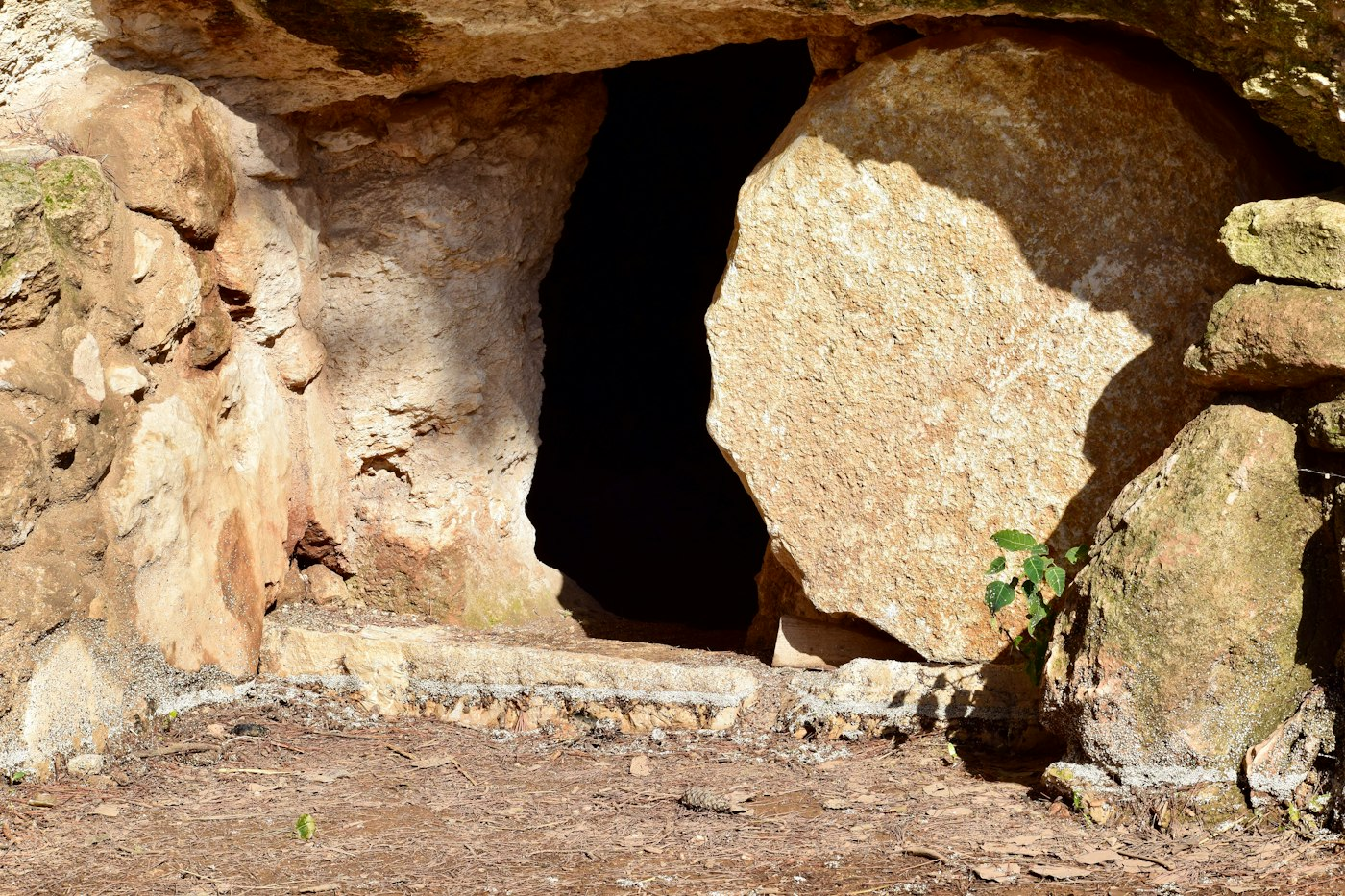
The four Gospels each tell the story of Easter morning, and each tells it a little differently. Matthew has an earthquake and one angel; John focuses on Mary Magdalene and a footrace between two disciples; Luke has two men in shining garments; Mark ends abruptly with frightened women. Readers sometimes find the differences troubling. They are actually what you would expect from several eyewitness accounts of the same astonishing morning, and together they give a fuller picture than any one alone.
Who Went to the Tomb
All four Gospels agree that women went first, early on the first day of the week, while it was still dark or just dawning. Mark names Mary Magdalene, Mary the mother of James, and Salome (Mark 16:1). Luke adds Joanna (Luke 24:10). John focuses on Mary Magdalene alone (John 20:1). They came to finish anointing the body, a task cut short by the Sabbath.
The detail is significant. In that culture a woman’s testimony carried little weight. No one inventing a story would have made women the first to see the empty tomb. The Gospels report it because that is how it happened.
What They Found
The great stone had been rolled away. Matthew describes an earthquake and an angel whose appearance terrified the guards (Matthew 28:2-4). Inside, the body was gone. Angelic messengers, one in Matthew and Mark, two in Luke and John, spoke to the women. Matthew’s angel gives the Easter announcement in full: “Fear not ye: for I know that ye seek Jesus, which was crucified. He is not here: for he is risen, as he said. Come, see the place where the Lord lay” (Matthew 28:5-6, KJV).
Luke’s messengers ask a question that has echoed ever since: “Why seek ye the living among the dead?” (Luke 24:5).
The Grave Clothes
John adds a detail from Peter and John’s run to the tomb. The linen wrappings were lying there, and “the napkin, that was about his head, not lying with the linen clothes, but wrapped together in a place by itself” (John 20:7). Grave robbers do not unwrap a body and fold the cloths. The scene spoke of order, not theft. John says that when he saw it, he believed (John 20:8).
Disbelief and Wonder
The first reaction of nearly everyone was not joy but fear and confusion. The women fled from the tomb trembling (Mark 16:8). When they told the apostles, “their words seemed to them as idle tales, and they believed them not” (Luke 24:11). Peter and John ran to see for themselves. Mary Magdalene, in John’s account, assumed the body had been moved and wept.
This honesty is one of the strongest marks of the accounts. The disciples were not expecting a resurrection. They had to be convinced, and over the following days, by repeated appearances of the risen Jesus, they were.
Why the Differences Do Not Trouble the Story
- Different witnesses notice different things. Ask four people to describe the same wedding and you will get four accounts that differ in detail and agree in substance.
- The core is identical. Early morning, the first day of the week, women, a moved stone, an empty tomb, angelic messengers, and the message that Jesus is risen. On every point that matters, the Gospels speak with one voice.
- The accounts can be fit together. Christians have long shown how the events can be arranged into one sequence. A story harmonized too neatly would look rehearsed.
Why is the tomb empty? The Gospels give the only answer that accounts for all the evidence: “He is risen, as he said.” Everything else in the Christian faith follows from that. Read all four accounts this Easter, Matthew 28, Mark 16, Luke 24 and John 20, and let the different voices tell you the same news.
Going Deeper: Reading the Four Accounts Side by Side
One of the best ways to spend Easter week is to read the four resurrection chapters slowly, one each day, and notice what each writer chose to emphasize. Each Gospel was written with its own readers in mind, and each brings out a different facet of the same morning.
- Matthew 28 stresses fulfillment and authority. The angel says “as he said,” and the chapter ends with the risen Jesus declaring, “All power is given unto me in heaven and in earth” (Matthew 28:18). The guards’ bribe shows the empty tomb was a fact even His enemies had to explain.
- Mark 16 is spare and urgent. Mark lets us feel the shock: trembling, amazement, fear. Notice the angel’s tender words: “tell his disciples and Peter” (Mark 16:7). The one who had denied Jesus was named personally.
- Luke 24 is about understanding. The messengers tell the women to “remember how he spake unto you” (Luke 24:6), and later Jesus opens the Scriptures on the road to Emmaus. Easter in Luke is the moment the whole Bible makes sense.
- John 20 is personal. Mary hears her name spoken, and she knows Him (John 20:16). Thomas is invited to touch the wounds. John tells us plainly why he wrote: “that ye might believe that Jesus is the Christ, the Son of God” (John 20:31).
What This Means for You
The empty tomb is not only a historical claim to be defended. It is a promise to be lived. Paul put it this way: “if Christ be not raised, your faith is vain; ye are yet in your sins” (1 Corinthians 15:17). But because He is raised, everything changes.
Death is not the last word
Those of us who have stood at gravesides know how final death feels. The empty tomb says that the grave is a doorway, not a dead end. Jesus is “the firstfruits of them that slept” (1 Corinthians 15:20), the first of a great harvest.
Your name is known
Mary was weeping in the garden until she heard her name. The risen Christ still calls His people one by one. You are not lost in a crowd.
Fear can turn to joy
The women left the tomb “with fear and great joy” (Matthew 28:8). Both at once. You do not have to have every question answered to begin walking in Easter hope.
Questions Readers Ask
Why did Mark’s Gospel end so suddenly?
Many of the oldest manuscripts of Mark end at 16:8, with the frightened women. Others include the longer ending found in most Bibles. Scholars discuss this carefully. Either way, the abrupt close leaves the reader with a question: what will you do with this news?
Why didn’t anyone recognize Jesus at first?
Mary thought He was the gardener, and the Emmaus travelers walked miles with Him unaware. The Gospels suggest His resurrection body was truly His, yet changed, and that recognition came as a gift. Often He was known in a word, a broken loaf, or a familiar voice.
Does it matter whether the resurrection was physical?
The Gospels insist that it was. The risen Jesus ate fish, invited touch and said, “a spirit hath not flesh and bones, as ye see me have” (Luke 24:39). That bodily resurrection is the pattern for our own hope.