
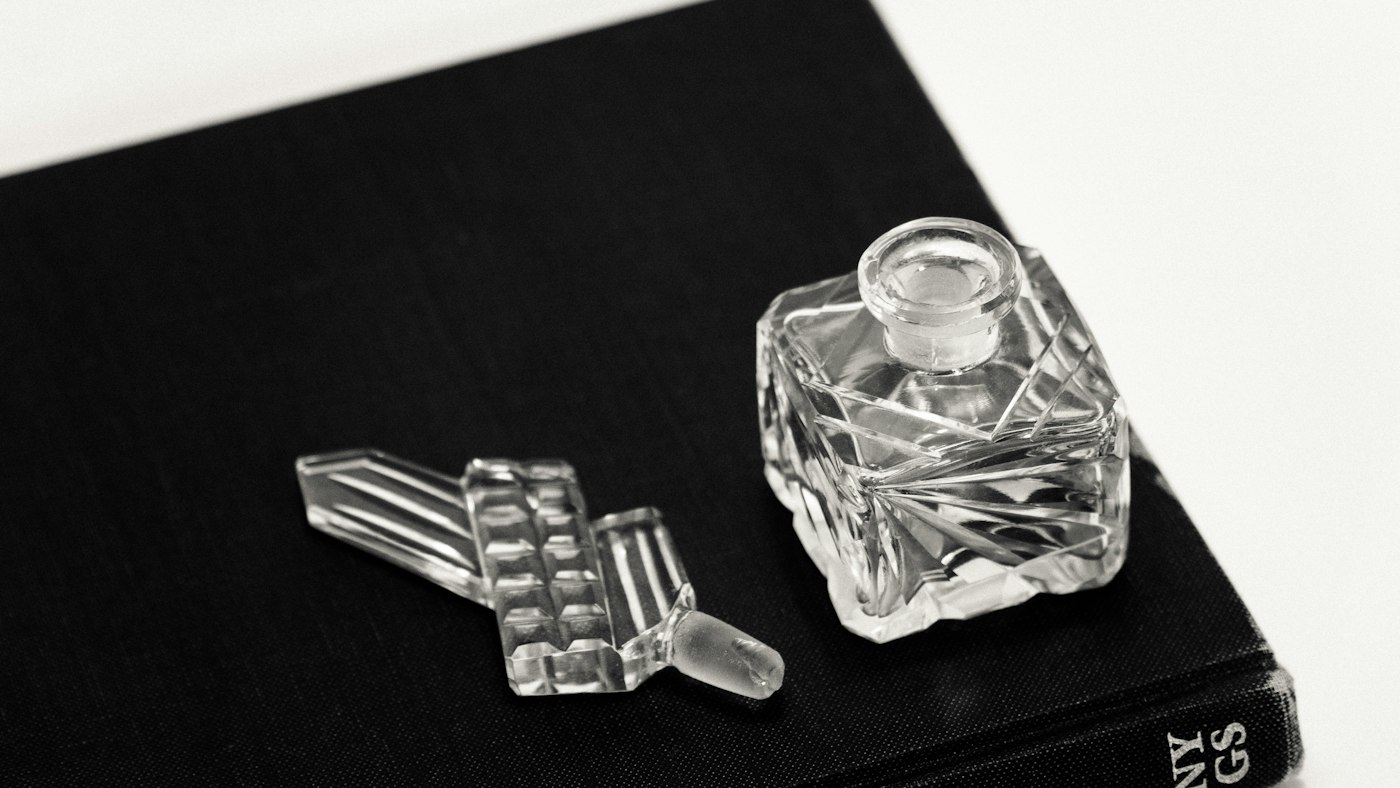
A few days before the crucifixion, at a dinner in Bethany, a woman did something so extravagant that the disciples objected and Jesus praised it. John names her: Mary, the sister of Martha and Lazarus. She poured a jar of perfume worth about a year’s wages over Jesus, and the fragrance filled the house. The story has often been confused with others, so it is worth reading carefully.
The Dinner at Bethany
John places the event six days before Passover, at a supper where Martha served and Lazarus, recently raised from the dead, sat at the table (John 12:1-2). Mark tells of the same anointing at the house of Simon the leper, with the chief priests already plotting (Mark 14:1-3). Both agree on what happened next.
“Then took Mary a pound of ointment of spikenard, very costly, and anointed the feet of Jesus, and wiped his feet with her hair: and the house was filled with the odour of the ointment” (John 12:3, KJV). Mark adds that she broke the alabaster flask and poured it on His head (Mark 14:3). Nothing was held back for later.
The Objection
The disciples were indignant. Mark says some of them murmured; John singles out Judas: “Why was not this ointment sold for three hundred pence, and given to the poor?” (John 12:5). Three hundred pence was roughly a year’s earnings for a laborer. The argument sounds reasonable, even godly. John punctures it: Judas said this “not that he cared for the poor; but because he was a thief” and kept the money bag (John 12:6).
Not every objection to extravagant worship comes from love of the poor. Some comes from a heart that cannot stand to see anything given away for nothing.
Jesus’ Defense
“Let her alone; why trouble ye her? she hath wrought a good work on me. For ye have the poor with you always, and whensoever ye will ye may do them good: but me ye have not always. She hath done what she could: she is come aforehand to anoint my body to the burying” (Mark 14:6-8).
Jesus was not dismissing care for the poor; He had spent His ministry caring for them. He was saying that this moment was unique. He was about to die, and Mary alone seems to have grasped it. Whether she fully understood or simply acted on love, her gift became a burial anointing offered while He could still receive it.
Then came a promise no one else in the Gospels received: “Wheresoever this gospel shall be preached throughout the whole world, this also that she hath done shall be spoken of for a memorial of her” (Mark 14:9). Every time the story is told, that promise is kept again.
Clearing Up a Common Confusion
This event is different from the one in Luke 7, where a woman described only as a sinner anointed Jesus’ feet much earlier in His ministry at the house of a Pharisee. It is also not connected to Mary Magdalene, who is never identified with either anointing in Scripture. Mary of Bethany is the woman who sat at Jesus’ feet while her sister served (Luke 10:39) and who met Him weeping at her brother’s tomb (John 11:32). Her anointing is the act of a longtime disciple who had listened well.
What Mary Teaches
- Worship can be costly. Mary gave something that could not be recovered, and Jesus called it good.
- Timing matters. Some acts of love have a window. She did not wait for a more convenient moment.
- Do what you can. Jesus’ commendation was simple: “She hath done what she could.” He asks no more and no less of us.
As Holy Week unfolds, Mary’s broken jar stands near the beginning of it, a quiet picture of a love that understands what Jesus is about to do and responds with everything.
Going Deeper: What Spikenard Was and Why It Mattered
Spikenard, also called nard, was a fragrant oil made from a plant that grows in the high mountains far to the east of Israel, in the region of the Himalayas. It had to be carried a great distance, which is part of why it was so expensive. It is mentioned in the Song of Solomon as a perfume of great beauty (Song of Solomon 1:12).
A pound of it, as John describes, was an enormous amount. Many have suggested it may have been a family treasure, the kind of thing set aside for a wedding or a burial. We cannot know for certain, but the point stands: Mary gave something irreplaceable. And because the flask was broken, the gift could not be taken back or saved for another day.
There is something else worth noticing. When Jesus went to the cross a few days later, the fragrance of that perfume may well have lingered on Him. Whether or not that was so, her act surrounded the last days of His life with a costly love, poured out while He was still there to receive it.
Putting It Into Practice: Doing What We Can
Most of us will never hold a jar worth a year’s wages. But Mary’s example still speaks to everyday discipleship. Here are some ways to let her story shape the coming week:
- Give Jesus your best hour, not your leftover one. If your clearest time of day is early morning, consider giving some of it to prayer and the Word.
- Do the loving thing now. If someone you love is aging or ill, do not wait to say what needs to be said. Write the letter. Make the visit. Some windows close.
- Be careful with your objections. Before criticizing someone’s generous or heartfelt act of devotion, ask whether your concern really comes from love.
- Remember that worship and service go together. Martha served, Lazarus sat at the table and Mary worshiped, all in the same house. Jesus welcomed each of them.
Questions for Reflection
- What is my “alabaster jar,” the thing I hold back from the Lord because it seems too precious?
- Have I ever sounded like the disciples, calculating the cost of someone else’s devotion?
- What would it look like for me to “do what I could” this week, no more and no less?
Questions Readers Ask
Why do Mark and John differ on whether she anointed His head or His feet?
The simplest explanation is that both are true. A pound of ointment is plenty to anoint both head and feet. Mark emphasizes the head, which in Scripture was associated with anointing kings and priests. John emphasizes the feet, the place where Mary was always found.
Did Jesus mean we should not worry about the poor?
No. His words echo Deuteronomy 15:11, which says the poor will never cease from the land and then commands, “thou shalt open thine hand wide unto thy brother.” Caring for the poor is a constant calling. Mary’s act was a unique moment within that calling, not a replacement for it.
Is this story only for Holy Week?
It sits near the start of that week in the Gospels, but its lesson belongs to every season. Whenever we read it, Mary’s broken jar asks the same quiet question: what will we pour out for the One who poured out His life for us?