
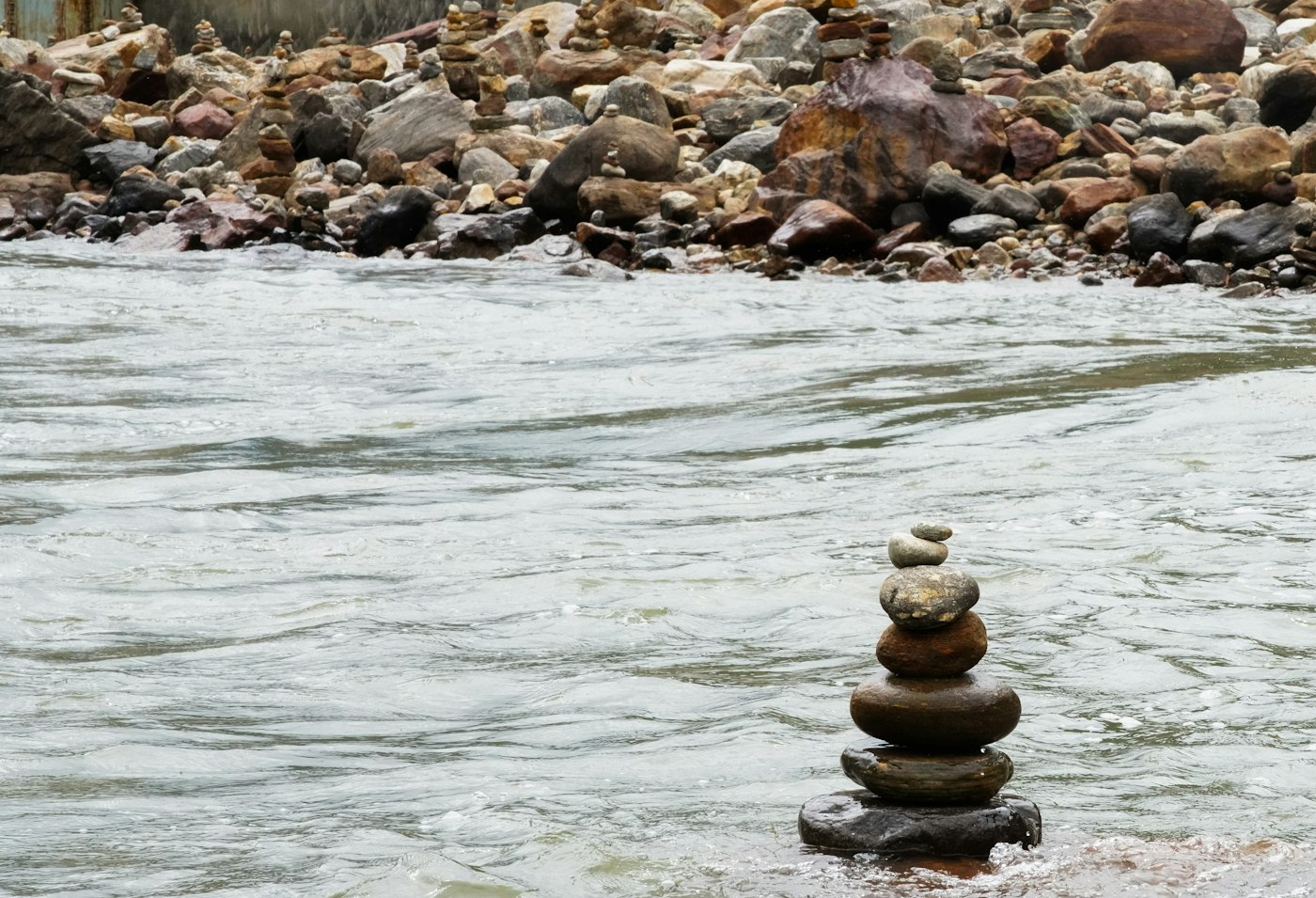
Memorial Day rests on a simple conviction: some things must not be forgotten. Scripture shares that conviction. Again and again God commands His people to remember, and one of the clearest examples comes in Joshua 4, when Israel crossed the Jordan River into the Promised Land.
Twelve Stones From the River
After forty years in the wilderness, Israel came to the Jordan at flood stage. As the priests carrying the ark stepped into the water, the river stopped, and the whole nation crossed on dry ground. Before the waters returned, God told Joshua to have one man from each tribe carry a stone from the middle of the riverbed. The stones were set up at Gilgal, where the people camped that night.
Joshua explained their purpose: “That this may be a sign among you, that when your children ask their fathers in time to come, saying, What mean ye by these stones? Then ye shall answer them, That the waters of Jordan were cut off before the ark of the covenant of the LORD” (Joshua 4:6-7, KJV).
A Memorial Designed for Questions
The stones were not beautiful. They were river rocks. Their power lay in the questions they would provoke. A child walking past would ask, “What are these for?” and a parent would tell the story.
God built faith education into the landscape. He knew that miracles fade from memory faster than we expect. Within a generation, Israel would struggle to remember. The book of Judges records a sad line: “there arose another generation after them, which knew not the LORD, nor yet the works which he had done for Israel” (Judges 2:10).
Why God Commands Remembering
Remembering is not mere nostalgia. In Scripture it shapes trust and obedience.
- Remembering guards against pride. Moses warned Israel that in times of plenty they would be tempted to forget the Lord (Deuteronomy 8:11-14).
- Remembering fuels hope. “I will remember the works of the LORD: surely I will remember thy wonders of old” (Psalm 77:11). Past faithfulness is evidence for future faithfulness.
- Remembering passes faith on. The stones were for the children.
- Remembering points to God’s glory. The stones stood “That all the people of the earth might know the hand of the LORD, that it is mighty” (Joshua 4:24).
Later, Samuel set up a stone and called it Ebenezer, “saying, Hitherto hath the LORD helped us” (1 Samuel 7:12). And on the night before His death, Jesus gave the church a meal of remembrance: “this do in remembrance of me” (Luke 22:19).
Building Your Own Memorial Stones
Memorial Day calls a nation to remember those who gave their lives. Joshua 4 calls believers to remember what God has done. Here are a few ways to make that a family habit:
- Keep a record. A notebook of answered prayers and God’s provision becomes a stack of stones over the years.
- Tell the stories. At the dinner table, share how you came to faith or how God carried you through a hard time.
- Mark the moments. Save a photo, a letter or an object that reminds you of God’s faithfulness, and explain it when someone asks.
- Visit places of memory. A cemetery, the church where you were baptized or a local memorial can open good conversations.
Someday a child may ask you, “What mean these stones?” Be ready with a story of God’s faithfulness.
Going Deeper: The Stones in the River
There is a detail in Joshua 4 that many readers miss. Besides the twelve stones carried to Gilgal, Joshua also “set up twelve stones in the midst of Jordan, in the place where the feet of the priests which bare the ark of the covenant stood” (Joshua 4:9). One memorial stood on the bank where everyone could see it. The other stood in the riverbed, hidden once the water returned.
That second memorial may say something about our own lives. Some of God’s faithfulness we can show to others. Some of it is known only to Him and to us: a quiet deliverance, a prayer answered in the night, a temptation resisted that no one else knew about. Both kinds of memorials matter. The hidden ones are no less real.
Gilgal, a place of beginnings
Gilgal became Israel’s first camp in the land. There the people renewed the covenant sign of circumcision and kept the Passover (Joshua 5:2-10). There the manna stopped, because they now ate the produce of the land (Joshua 5:12). The memorial stones stood at the very spot where a new chapter began. Remembering God’s past faithfulness is often the best preparation for stepping into what He has next.
Common Mistakes in Remembering
- Remembering only the hard parts. Grief needs room, but if all we recall are losses, we forget the God who carried us through them.
- Remembering only ourselves. The stones were about what God did, not about Israel’s courage. Keep the focus on His faithfulness.
- Assuming children will just pick it up. Joshua expected parents to tell the story. Faith is rarely passed on without words.
- Letting memorials become idols. Centuries later, Israel burned incense to the bronze serpent Moses had made, and King Hezekiah had to destroy it (2 Kings 18:4). Memorials point to God; they must never replace Him.
Questions for Family Conversation
Around the table this Memorial Day weekend, try asking a few of these questions:
- What is one time you saw God help our family?
- Who in our family served our country, and what do we know about them?
- What object in our home reminds us of God’s faithfulness?
- If we set up our own “stone,” what would it stand for?
- How can we honor people who gave their lives for others?
Questions Readers Ask
Is it right to mix faith and national remembrance?
Christians can honor those who sacrificed for their country while remembering that our highest loyalty is to Christ. Memorial Day can be an occasion for gratitude, grief and prayer, all of which fit comfortably within faith.
What if I don’t have many “stones” to point to?
Start now. Begin keeping a simple record of God’s faithfulness, however small. Over the years, the pile will grow, and one day you will be surprised how many stones you have. Even a single line, “God provided today,” written in the margin of a calendar, is a stone set up by the river. Your grandchildren may treasure it more than you can imagine.