
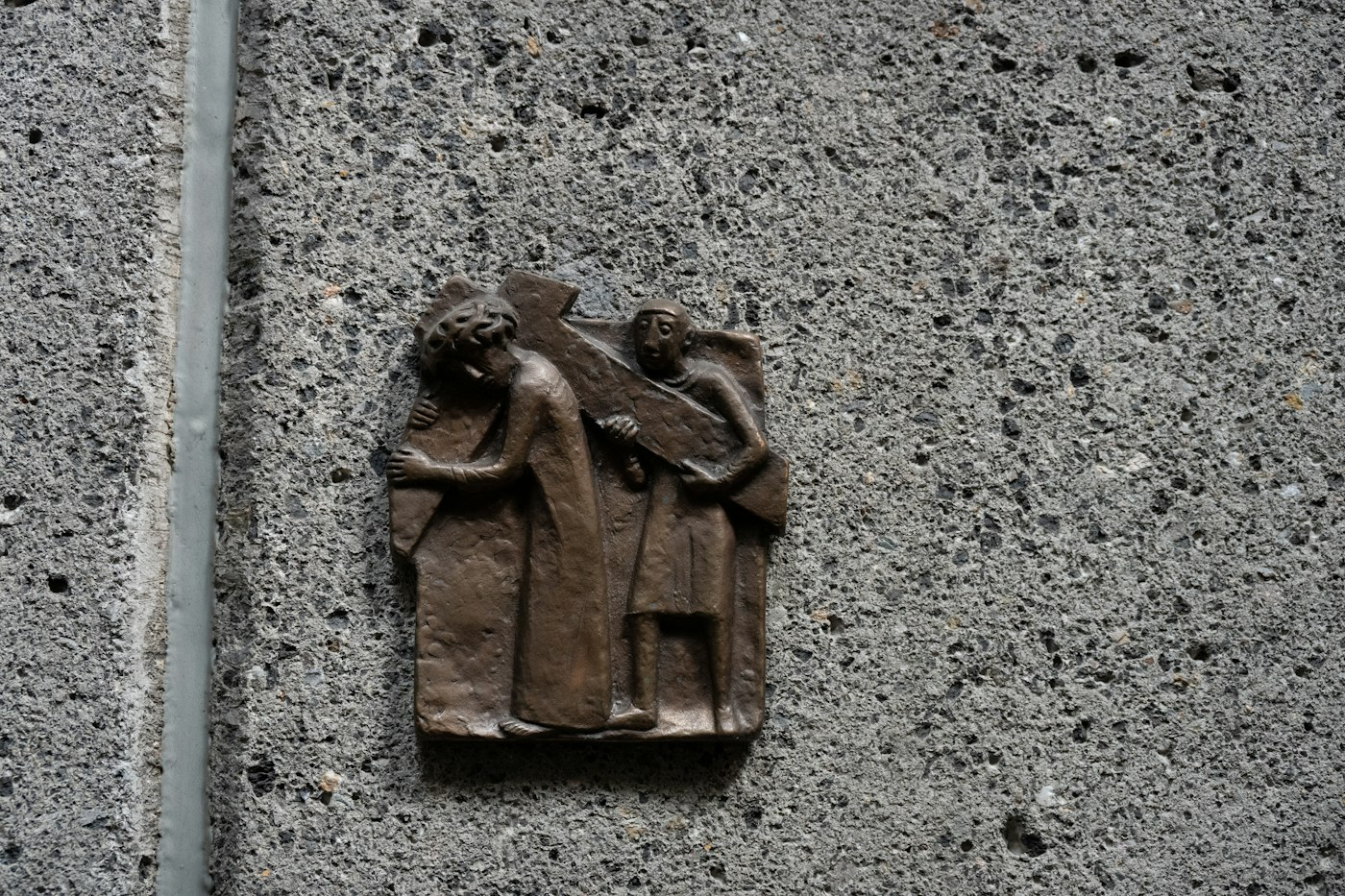
Walk into many churches during Lent and you may see fourteen small plaques or carvings spaced around the walls. In other places you will find them along an outdoor path. These are the Stations of the Cross, a devotional practice that traces Jesus’ final steps from His condemnation to His burial. For Christians who did not grow up with the practice, here is a clear guide to what it is, where it came from and how it can be used.
Where the Practice Came From
From the earliest centuries, Christian pilgrims who reached Jerusalem wanted to walk where Jesus walked. They retraced the route from the place of His trial to Golgotha and the tomb, stopping to pray along the way. Over time that route became known as the Way of Sorrows, the Via Dolorosa.
Most Christians could never make that journey. So in the medieval period, churches in Europe began to recreate it locally, placing a series of images along their walls or grounds so that believers could make the pilgrimage in spirit. The number of stops varied for centuries before settling at fourteen.
The Traditional Fourteen Stations
- Jesus is condemned to death
- Jesus takes up His cross
- Jesus falls the first time
- Jesus meets His mother
- Simon of Cyrene helps carry the cross (Luke 23:26)
- Veronica wipes the face of Jesus
- Jesus falls the second time
- Jesus speaks to the women of Jerusalem (Luke 23:27-31)
- Jesus falls the third time
- Jesus is stripped of His garments
- Jesus is nailed to the cross
- Jesus dies on the cross
- Jesus is taken down from the cross
- Jesus is laid in the tomb
Some stations come directly from the Gospels. Others, such as the three falls and the meeting with Veronica, come from later tradition rather than Scripture. In recent decades a “Scriptural Way of the Cross” has become common, using only events recorded in the Gospels, from Gethsemane to the burial. Some versions add a fifteenth station for the resurrection so that the journey does not end at the tomb.
How the Stations Are Used
The practice is simple. A person or group moves from station to station. At each one they pause, read a short Scripture passage or reflection, and pray. Many churches hold a Stations service on Fridays in Lent and especially on Good Friday. Some people walk them alone, taking as long as they need at each stop.
The physical movement is part of the point. Walking, stopping and kneeling engage the body in prayer, and the slow pace forces the mind to linger on each moment of the passion rather than rushing to the familiar ending.
A Word for Newcomers
The Stations are most associated with Catholic and Anglican churches, but nothing in the practice requires a particular denomination. At heart it is a structured way to meditate on the sufferings of Christ, something every Christian tradition encourages. Paul wanted to know “the fellowship of his sufferings” (Philippians 3:10, KJV), and Hebrews urges believers to consider Jesus, who “endured such contradiction of sinners” (Hebrews 12:3).
You can even make your own at home: choose eight or ten passages from the passion narratives, read one at a time with a pause for prayer, and finish with the resurrection.
Why It Helps
We know the story of Good Friday so well that we can skim it. The Stations slow us down. They put one event in front of us at a time and ask us to stay there. Whether you walk a formal set at a church or read the passion slowly in your living room, the goal is the same: to follow Jesus on the hardest road He ever walked, and to come away loving Him more.
A Scriptural Way of the Cross
For those who prefer to stay entirely with the Gospel accounts, here is a version of the Stations built only on events recorded in Scripture. Many churches use a list much like this one:
- Jesus prays in the garden of Gethsemane (Luke 22:39-46)
- Jesus is betrayed by Judas and arrested (Mark 14:43-46)
- Jesus is condemned by the council (Luke 22:66-71)
- Peter denies Jesus (Matthew 26:69-75)
- Jesus is judged by Pilate (Mark 15:1-15)
- Jesus is scourged and crowned with thorns (John 19:1-3)
- Jesus takes up His cross (John 19:16-17)
- Simon of Cyrene helps carry the cross (Mark 15:21)
- Jesus speaks to the women of Jerusalem (Luke 23:27-31)
- Jesus is crucified (Luke 23:33-34)
- Jesus promises paradise to the penitent thief (Luke 23:39-43)
- Jesus entrusts His mother and the beloved disciple to each other (John 19:25-27)
- Jesus dies on the cross (Luke 23:44-46)
- Jesus is laid in the tomb (Matthew 27:57-61)
Many add a final reading from John 20 or Luke 24, so that the journey ends with the empty tomb and the risen Lord.
How to Walk the Stations at Home
You do not need a special building to use this practice. Here is a simple way to do it in your own home or yard:
- Choose your readings. Use the list above, or select eight to ten passages from one Gospel’s account of the passion.
- Set up your stops. Place a slip of paper with each reference in a different spot around a room, a hallway or a garden path.
- Begin with prayer. Ask the Lord to help you see Him and to love Him more through what you read.
- At each stop: read the passage slowly, pause in silence for a minute, and then pray a short response. A simple line can be repeated at each station, such as “Lord Jesus, You did this for me.”
- Move slowly. Walking between stations gives time for what you have read to settle.
- Finish with thanksgiving. End with the resurrection reading and a prayer of praise.
Families can do this together, letting children read the passages or carry a small cross from stop to stop. The whole practice usually takes thirty minutes to an hour.
Questions Readers Ask
Is this practice biblical?
The practice itself is a tradition, not a command. But meditating on the sufferings of Christ is thoroughly biblical, and the Scriptural Way of the Cross keeps every station rooted in the Gospel record.
Can I use the Stations if my church does not?
Yes. Many believers from many traditions find the practice helpful. Use it personally, in a small group or with your family.
Is it too heavy for children?
The story of the cross is serious, but children can understand it when it is told simply and lovingly. Focus on Jesus’ love and always end with the resurrection.
Lord Jesus, You walked the road of sorrows for me. Slow me down so I can see what You endured, and let what I see make me love You more. Thank You that the road did not end at the tomb. Amen.