
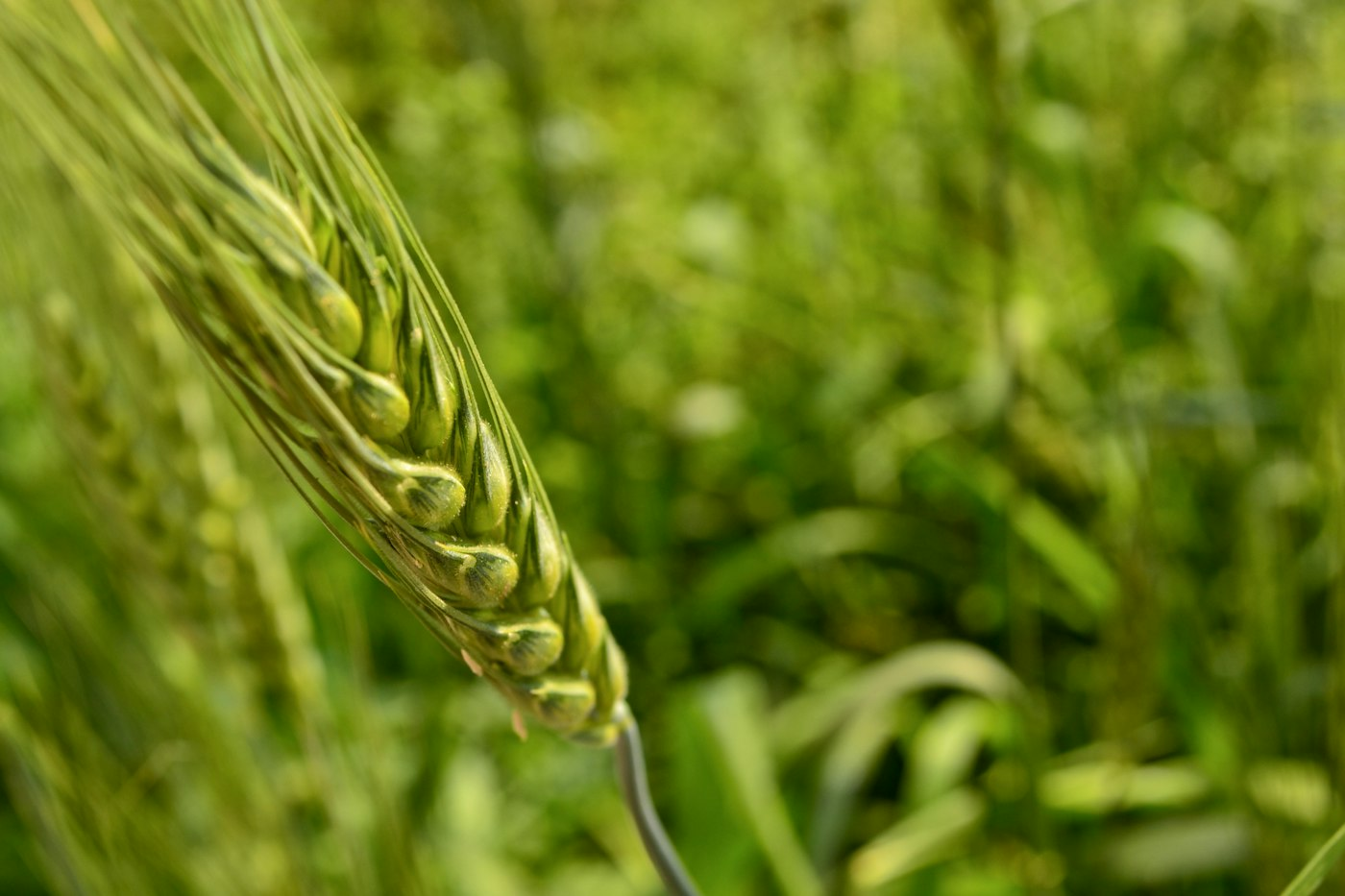
Across much of the country, March is when gardeners start seeds and farmers begin to think about the ground. It is also the month when Lent moves toward Holy Week. Jesus connected those two things in a single sentence: “Verily, verily, I say unto you, Except a corn of wheat fall into the ground and die, it abideth alone: but if it die, it bringeth forth much fruit” (John 12:24, KJV). Planting season is a good time to think about what He meant.
When Jesus Said It
The setting is the last week of His life. Jesus had just entered Jerusalem to shouts of Hosanna, and some Greeks who had come for the feast asked to see Him. Instead of basking in the attention, Jesus began to speak of His death: “The hour is come, that the Son of man should be glorified” (John 12:23). Then He gave the picture of the seed.
A grain of wheat kept safe in a jar stays exactly what it is: one grain. Only when it is buried, and its outer shell breaks down, does it become a stalk heavy with new grain. Jesus was describing His own path. The cross looked like loss. It was actually planting.
The Principle Applies to Us
Jesus did not leave the saying as a statement about Himself alone. The next verses widen it: “He that loveth his life shall lose it; and he that hateth his life in this world shall keep it unto life eternal. If any man serve me, let him follow me” (John 12:25-26).
The pattern of the seed is the pattern of discipleship. What we clutch, we lose. What we release into God’s hands, He multiplies. The time given to someone who cannot repay you, the money given away, the ambition laid down, the forgiveness offered at real cost: these are seeds. They disappear into the ground, and for a while nothing seems to happen.
What Gardeners Know
Anyone who has planted a garden understands a few things about seeds that illuminate this verse:
- Burial is not the end. A seed under the soil looks lost. It is actually in the only place it can grow.
- There is a waiting period. Nothing visible happens for days or weeks. Digging it up to check will kill it.
- The harvest is out of proportion to the seed. One grain produces a head with many grains. God’s math is generous.
- The seed cannot stay a seed and also become a plant. Something has to be given up for something greater to come.
Paul used the same image to describe resurrection: “that which thou sowest is not quickened, except it die” (1 Corinthians 15:36). The body laid in the ground is a seed; what rises is the plant, glorious and new.
Sowing in Lent
This is a season for deliberate planting. Consider where God may be asking you to put something into the ground: a habit of comfort, a grudge, a portion of your income, a block of your week. Then consider that the same God who wrote the seed into creation wrote it into the gospel. He does not waste what is given to Him.
And remember the waiting. Paul encouraged tired believers, “let us not be weary in well doing: for in due season we shall reap, if we faint not” (Galatians 6:9). Due season is not our season. But it comes.
The Harvest Ahead
A few days after Jesus spoke these words, His body was laid in a garden tomb. On the third day, the first fruit of the harvest appeared. Every spring, the sprouting fields preach the same sermon: what falls into the ground and dies does not stay dead. It brings forth much fruit.
Going Deeper: “Sir, We Would See Jesus”
The request that prompted this saying deserves attention. The Greeks came to Philip and said, “Sir, we would see Jesus” (John 12:21). Philip told Andrew, and together they told Jesus. On the surface, Jesus’ answer seems unrelated. He began talking about a seed and His coming death.
But His answer was deeply connected. These visitors from beyond Israel represented the wider world that Jesus came to save. How would people from every nation “see” Him? Not through a private meeting that afternoon, but through the cross and resurrection. A few verses later He said, “And I, if I be lifted up from the earth, will draw all men unto me” (John 12:32). The seed had to fall into the ground before the harvest of the nations could come.
Jesus also let His disciples see His own struggle: “Now is my soul troubled; and what shall I say? Father, save me from this hour: but for this cause came I unto this hour. Father, glorify thy name” (John 12:27-28). A voice answered from heaven. The Son did not pretend the cost was small. He chose it anyway, for the glory of the Father and the good of the world.
Seeds in Ordinary Life
The principle of the seed can feel abstract until we picture it in the everyday. Here are a few examples of what dying to self and sowing for God might look like:
- A parent gives up evenings of personal time to read Scripture and pray with children who seem not to be listening. Years later, those words may bear fruit in ways the parent never sees.
- A church member faithfully teaches a small class, week after week, with little visible result. The seed is still in the ground.
- A neighbor keeps showing kindness to someone who is prickly and ungrateful, choosing to love without return.
- A believer forgives a deep wrong, letting go of the right to get even. Something has to die for peace to grow.
In each case, something is given up. And in each case, the harvest belongs to God and comes in His time.
Questions for Reflection
- What am I holding onto so tightly that it “abideth alone”?
- Where have I planted something for God and grown discouraged waiting for fruit?
- Am I tempted to dig up my seeds to check on them, demanding quick results?
- What does it mean for me to follow Jesus in the pattern of the seed this Lent?
Questions Readers Ask
Does “hateth his life” mean I should hate myself?
No. Jesus is using strong contrast to show priority. To “hate” one’s life in this world means to love Him and His kingdom so much more that our own comfort and ambition no longer rule us.
What if I never see the fruit of what I sow?
Many faithful people never see the full harvest in this life. Hebrews 11 describes believers who “died in faith, not having received the promises” (Hebrews 11:13). God remembers every seed.
Lord Jesus, You fell into the ground and died so that we might live. Teach me to let go of what I clutch, to plant what You ask, and to wait patiently for Your harvest. Glorify Your name in my life. Amen.