
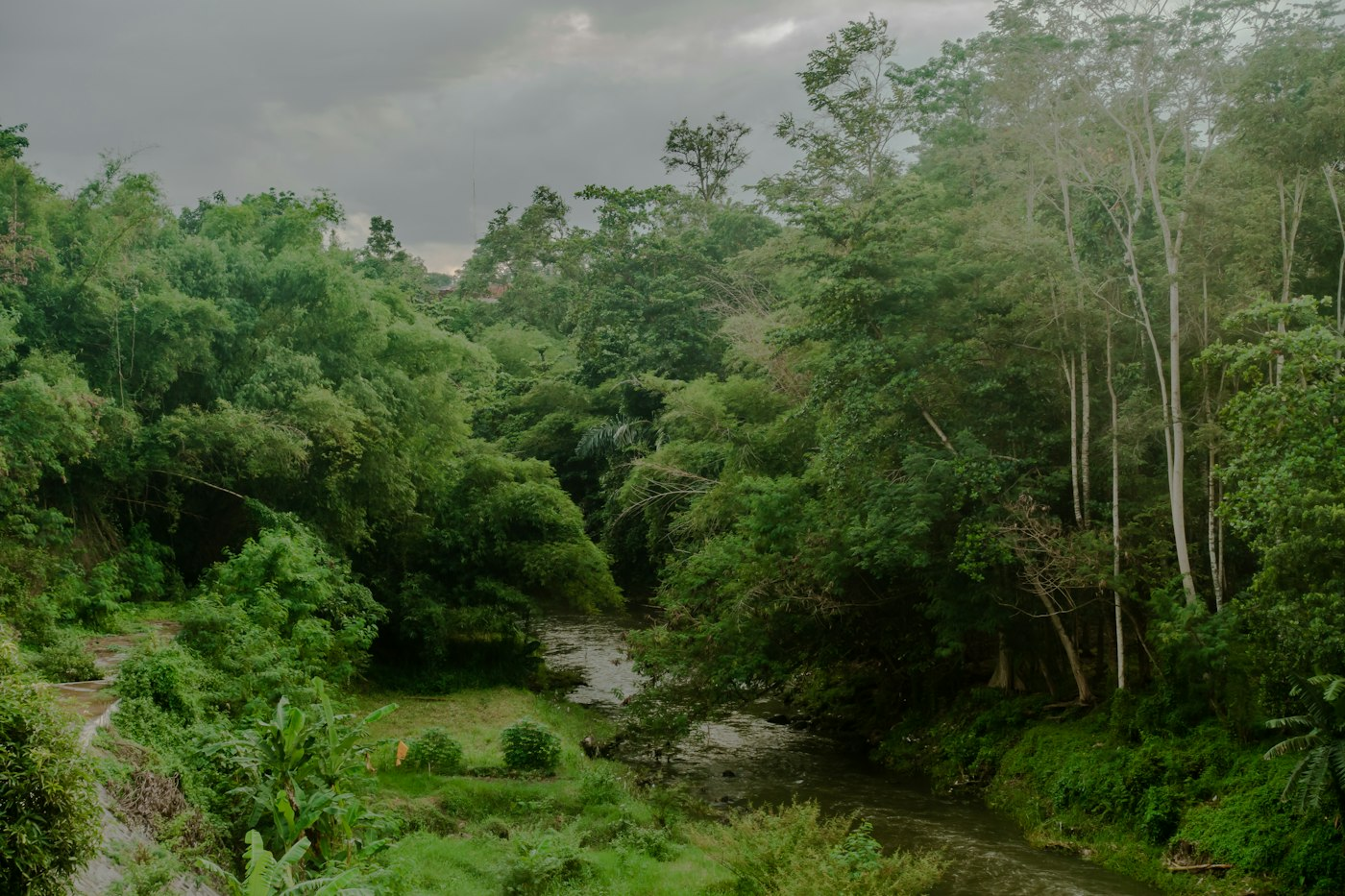
Late spring is a season of visible renewal. Trees that stood bare a few months ago are full. Gardens are coming up, birds are nesting and the days stretch long. It is fitting that many churches read Psalm 104 on Pentecost Sunday, because this psalm celebrates the God who renews the earth, the same God who renews His people by His Spirit.
A Hymn to the Creator
The psalm opens with “Bless the LORD, O my soul” (Psalm 104:1, KJV) and closes with nearly the same words (Psalm 104:35). In between, it surveys creation almost in the order of Genesis 1: light and sky, waters and land, plants and animals, sun and moon. But where Genesis tells what God made, Psalm 104 sings about how He keeps caring for it. It pictures God covering Himself “with light as with a garment” and stretching out “the heavens like a curtain” (Psalm 104:2).
A World Full of His Care
The psalmist delights in details:
- “He sendeth the springs into the valleys, which run among the hills” (Psalm 104:10).
- The birds “sing among the branches” (Psalm 104:12).
- “He causeth the grass to grow for the cattle, and herb for the service of man: that he may bring forth food out of the earth” (Psalm 104:14).
- “He appointed the moon for seasons: the sun knoweth his going down” (Psalm 104:19).
- “Man goeth forth unto his work and to his labour until the evening” (Psalm 104:23).
Nothing is too small for God’s attention: the stork in the fir trees, the wild goats on the high hills, the conies in the rocks, the young lions that “seek their meat from God” (Psalm 104:21). Then comes the exclamation: “O LORD, how manifold are thy works! in wisdom hast thou made them all: the earth is full of thy riches” (Psalm 104:24).
Every Creature Waits on Him
The psalm makes a quiet but staggering claim. Creation does not run on its own. “These wait all upon thee; that thou mayest give them their meat in due season. That thou givest them they gather: thou openest thine hand, they are filled with good” (Psalm 104:27-28). When God hides His face, His creatures are troubled. When He takes away their breath, they die.
Then comes the turning point: “Thou sendest forth thy spirit, they are created: and thou renewest the face of the earth” (Psalm 104:30). The Spirit who moved over the waters in Genesis 1 sustains every living thing. Each spring is a small demonstration of that verse.
The Spirit Who Renews
This is why the psalm belongs to Pentecost. The Spirit who renews the face of the earth also renews human hearts. Paul writes that God saved us “by the washing of regeneration, and renewing of the Holy Ghost” (Titus 3:5). What happens in the fields each spring happens in a believer’s life by grace: what was cold comes alive, and what was barren begins to bear fruit.
Making the Psalm Your Own
The psalmist resolves to keep singing: “I will sing unto the LORD as long as I live: I will sing praise to my God while I have my being. My meditation of him shall be sweet: I will be glad in the LORD” (Psalm 104:33-34). Try praying it this season in a few simple ways. Read it outdoors, and stop to thank God for each thing you can see that the psalm names. Pray verse 30 over any part of your life that still feels like winter. And let verse 23 reshape how you see your daily work, as part of God’s ordered and generous world.
The God who sends the springs into the valleys is near. Bless the Lord, O my soul.
Going Deeper: The Psalm’s Shadows
Psalm 104 is a joyful song, but it is not naive. It names the darker parts of creation honestly. The waters once covered the mountains until God rebuked them (Psalm 104:6-7). Night comes, and “all the beasts of the forest do creep forth” (Psalm 104:20). There is the sea, “wherein are things creeping innumerable,” and “that leviathan, whom thou hast made to play therein” (Psalm 104:25-26). Even the most fearsome creature of the deep is, in this psalm, God’s plaything.
And near the end comes a sober prayer: “Let the sinners be consumed out of the earth, and let the wicked be no more” (Psalm 104:35). The psalmist knows the world is not yet as it should be. His praise is not a denial of evil but a confidence that the God who made the world will one day set it right. That is the hope Pentecost points to as well. The Spirit renews hearts now, and creation itself waits for its full renewal (Romans 8:19-21).
Work as part of creation
Verse 23 places human labor right alongside the lions and the birds: “Man goeth forth unto his work and to his labour until the evening.” Our work is not outside God’s care. Whether in a field, an office, a kitchen or a workshop, ordinary labor is part of the good order He sustains.
A Walk Through Psalm 104
Here is a simple way to pray this psalm over the course of a week, one section at a time:
- Verses 1-4: Light and sky. Step outside at sunrise or sunset. Thank God for the beauty of the heavens.
- Verses 5-9: Waters and boundaries. Thank God for the limits He sets, including the limits that keep chaos at bay in your own life.
- Verses 10-18: Springs, trees and creatures. Look for birds, plants and animals near your home. Name them as gifts.
- Verses 19-23: Seasons and work. Offer your daily work to God. Ask Him to bless the labor of your hands.
- Verses 24-26: The sea. Reflect on the vastness of creation and how small and loved we are within it.
- Verses 27-30: Dependence. Confess your need of God for every breath. Pray for His Spirit to renew you.
- Verses 31-35: Praise. End the week by writing your own short song or prayer of thanks.
Questions Readers Ask
Does Psalm 104 teach that God is in everything?
No. The psalm is careful to distinguish the Creator from what He made. God wears light “as with a garment,” but He is not the light. He sustains every creature, but He is not a creature. That distinction lets us enjoy creation without worshiping it.
What does it mean that God “renews the face of the earth”?
It describes the ongoing work of God’s Spirit in sustaining and refreshing creation, seen in the cycles of seasons, growth and new life. Christians also see in it a hint of the new creation God has promised.
Why does the psalm end with a prayer against the wicked?
Because the psalmist loves God’s world and longs to see it free from what spoils it. It is a cry for justice, not personal revenge, and it is left in God’s hands.