
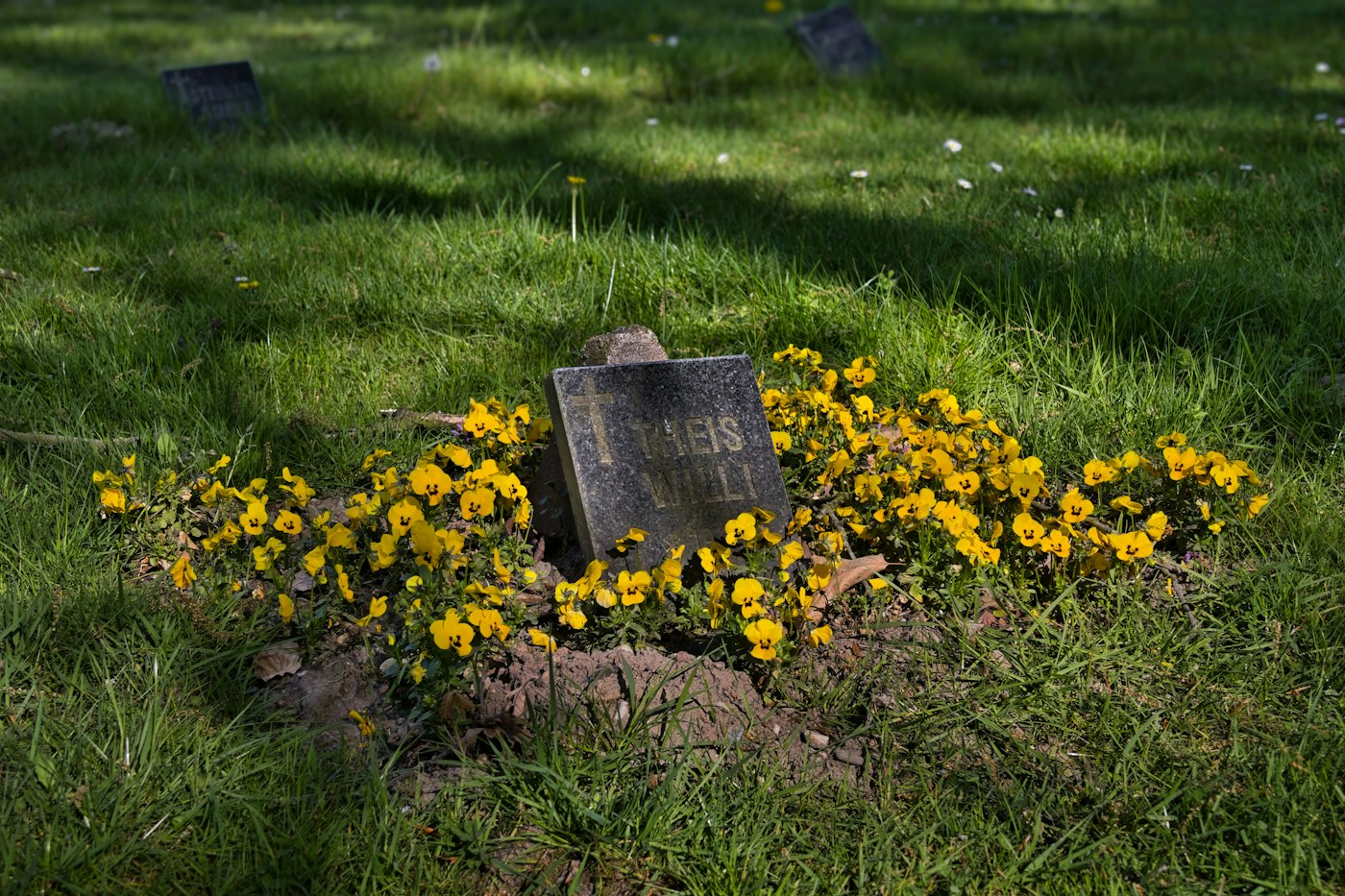
I will not describe it. Some things are too holy and too painful for a page, and the funeral of a child is one of them. I will say only this: I had no words, and God was present when I had none. I have stood beside many graves over the years. That one taught me more than all the others about the limits of a pastor and the faithfulness of God.
When a Pastor Has No Words
Pastors are expected to have something to say. We are called to comfort, to explain, to point to hope. Most of the time, even at funerals, we can do that. We speak of a long life well lived, of faith kept to the end, of a believer gone home.
The death of a child takes all of that away. There is no long life to celebrate. There is no explanation that satisfies. Every sentence feels too small. I learned there that the most honest thing a pastor can sometimes say is nothing at all.
Job’s friends understood that at first. When they came and saw his suffering, “they sat down with him upon the ground seven days and seven nights, and none spake a word unto him: for they saw that his grief was very great” (Job 2:13). Their mistake came later, when they began explaining. Their silence was the best thing they gave him.
God Was Present
And yet I was not alone in my silence. I cannot fully explain it, but I knew God was there. Not as an answer, but as a presence. Psalm 34:18 says, “The LORD is nigh unto them that are of a broken heart; and saveth such as be of a contrite spirit.” Nigh. Near. Close enough to touch.
Romans 8:26 has meant more to me since then: “Likewise the Spirit also helpeth our infirmities: for we know not what we should pray for as we ought: but the Spirit itself maketh intercession for us with groanings which cannot be uttered.” When we have no words, the Spirit prays for us with groanings too deep for language. Our silence is not empty. It is filled with His intercession.
Jesus Himself stood at a graveside and wept (John 11:35). He knew He was about to raise Lazarus, and still He wept. That tells me that God does not ask grieving parents to hold back their tears. He weeps with them.
What Grieving Parents Need
If you know a family who has buried a child, you may feel helpless. You are. But you can still love them. Here are some things I have learned about walking alongside parents in that kind of grief:
- Show up. Your presence matters more than your words. Sit with them. Bring a meal. Stand at the graveside.
- Do not explain. Avoid saying things like “God needed another angel” or “Everything happens for a reason.” Even when well meant, such words can wound.
- Say the child’s name. Many parents fear their child will be forgotten. Speaking the name is a gift.
- Keep coming back. The casseroles stop after a few weeks. The grief does not. Call in the second month, the sixth month, on the birthday and on the anniversary.
- Let them grieve their way. Mothers and fathers often grieve differently. Do not rush either one.
- Pray for them by name, for a long time. They may not be able to pray for themselves.
- Help them find support. A pastor, a grief counselor or others who have walked this road can help carry what friends cannot.
The Hope That Remains
I will not offer easy answers, but I will not withhold the hope of the gospel either. David, after the death of his infant son, said, “I shall go to him, but he shall not return to me” (2 Samuel 12:23). Many grieving believers have found comfort in those words.
Jesus welcomed children and said, “Suffer little children, and forbid them not, to come unto me: for of such is the kingdom of heaven” (Matthew 19:14). The One who took little ones in His arms on earth has not changed.
And there is a day coming when “God shall wipe away all tears from their eyes; and there shall be no more death, neither sorrow, nor crying, neither shall there be any more pain: for the former things are passed away” (Revelation 21:4). That promise does not erase the grief now. But it gives the grief somewhere to go.
Paul did not tell the Thessalonians not to grieve. He told them not to grieve “even as others which have no hope” (1 Thessalonians 4:13). Christian grief is real grief, but it is grief with a horizon.
For Pastors Who Will Face This
If you are a young pastor, you will likely face a day like this. Let me tell you what I wish I had known. You do not need to have the right words. You need to be present, to pray, to read the Scriptures gently and to let God be God. Choose short passages: Psalm 23, Psalm 34:18, Psalm 46:1, John 14:1–3, Revelation 21:4. Keep your sermon brief and your love long. And afterward, find someone to talk to yourself. That kind of grief should not be carried alone.
What to Do This Week
- If you know parents who have lost a child, send a note that simply says the child’s name and that you remember.
- Pray for grieving parents in your church and community.
- Read Psalm 34 and Romans 8:26–39 and rest in the promise that God is near the brokenhearted.
- If you are grieving, let someone sit with you. You do not have to carry it alone.
A Prayer
Lord, hold the parents who have buried children. Be near to their broken hearts. Pray for them with groanings when they cannot pray. Give them friends who will sit in silence and stay for the long road. Comfort them with the hope of the day when You will wipe away every tear. And when we have no words, let us trust that You are present still. Amen.