
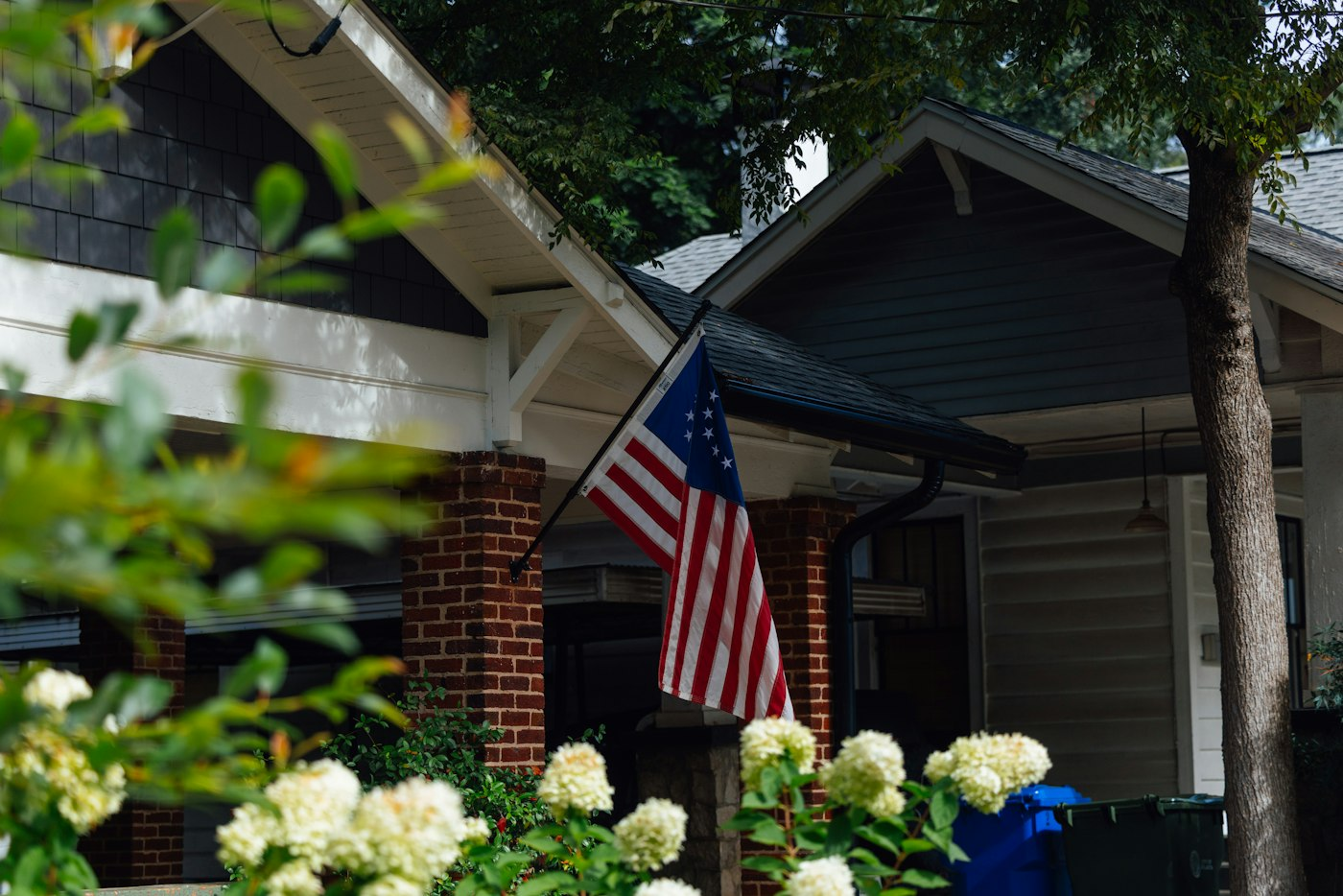
The Fourth of July is loud. Fireworks boom over ballfields and harbors, bands play marches and flags line Main Street. It is a day for celebrating a nation’s history and strength, and there is nothing wrong with gratitude for the place God has given us to live. But two psalms offer a needed word for the holiday: real security does not come from power.
A Prayer Before the Battle
Psalm 20 is a prayer the people offered for their king, probably as he prepared for war. It opens with blessing: “The LORD hear thee in the day of trouble; the name of the God of Jacob defend thee; Send thee help from the sanctuary, and strengthen thee out of Zion” (Psalm 20:1-2, KJV).
Then comes its most famous line: “Some trust in chariots, and some in horses: but we will remember the name of the LORD our God” (Psalm 20:7). Chariots were the advanced military technology of the ancient world, and Israel’s neighbors often had more of them. The psalm does not mock preparation. It simply refuses to place ultimate confidence in it.
The prayer ends, “Save, LORD: let the king hear us when we call” (Psalm 20:9). Even a king needs help from heaven.
No King Is Saved by an Army
Psalm 33 makes the same point in different words: “There is no king saved by the multitude of an host: a mighty man is not delivered by much strength. An horse is a vain thing for safety: neither shall he deliver any by his great strength” (Psalm 33:16-17).
The psalm sets human plans beside God’s: “The LORD bringeth the counsel of the heathen to nought: he maketh the devices of the people of none effect. The counsel of the LORD standeth for ever, the thoughts of his heart to all generations” (Psalm 33:10-11). Nations rise and fall. God’s purposes do not.
Blessed Is the Nation
The best-known verse of Psalm 33 often appears on holiday programs: “Blessed is the nation whose God is the LORD; and the people whom he hath chosen for his own inheritance” (Psalm 33:12). In its first setting, it described Israel, the people God had chosen. No modern country stands in exactly that covenant position. Still, the principle holds for any people: “Righteousness exalteth a nation: but sin is a reproach to any people” (Proverbs 14:34).
That makes the verse less a boast than an invitation. A nation is blessed not by claiming God’s name but by honoring Him with justice, mercy and humility.
Praying These Psalms on Independence Day
Psalm 33 closes with words any believer can pray this week: “Our soul waiteth for the LORD: he is our help and our shield. For our heart shall rejoice in him, because we have trusted in his holy name. Let thy mercy, O LORD, be upon us, according as we hope in thee” (Psalm 33:20-22).
- Thank God for the freedoms and blessings you enjoy, naming a few specifically.
- Pray for leaders, that they would seek wisdom rather than rely on strength alone.
- Pray for those who serve in uniform and for their families.
- Confess any place where your own hope rests on chariots and horses of your own, such as savings, status or skill.
Enjoy the fireworks. Then, when the smoke clears, remember the name of the LORD your God.
Going Deeper: Remembering the Name
Psalm 20:7 says that “we will remember the name of the LORD our God.” Some translations read “trust in the name,” but the King James rendering of “remember” captures something important. In Scripture, God’s name stands for His character and His record. To remember His name is to call to mind who He is and what He has done.
Israel had a long memory of God defeating chariots. At the Red Sea, Pharaoh’s army came after them with “six hundred chosen chariots, and all the chariots of Egypt” (Exodus 14:7). Moses told the people, “Fear ye not, stand still, and see the salvation of the LORD” (Exodus 14:13). Afterward they sang, “Pharaoh’s chariots and his host hath he cast into the sea” (Exodus 15:4). Later, in the days of Deborah, the Canaanite commander Sisera had “nine hundred chariots of iron” (Judges 4:3), yet the Lord gave Israel the victory. When the people sang “Some trust in chariots,” they were remembering those stories.
There is a quiet warning in this history too. Israel’s own kings were tempted to trust in horses. Deuteronomy instructed that a king “shall not multiply horses to himself, nor cause the people to return to Egypt” (Deuteronomy 17:16). Isaiah later rebuked those who “go down to Egypt for help; and stay on horses, and trust in chariots, because they are many… but they look not unto the Holy One of Israel” (Isaiah 31:1). The danger is not only for pagan nations. God’s own people can forget the Name and lean on the chariots.
Our Modern Chariots
Most of us do not lie awake worrying about horses. But every generation has its chariots, the things we are tempted to trust in place of God.
- Money. A healthy savings account is wise stewardship, but it cannot keep a heart at peace.
- Health. We are grateful for good doctors and strong bodies, but neither guarantees tomorrow.
- Politics. Good leaders and sound laws matter, yet no election can save a soul.
- Reputation. A good name is valuable (Proverbs 22:1), but it can be lost in a day.
- Our own competence. Skill and hard work are gifts, but they are still gifts.
Psalm 20 does not tell us to throw away our chariots. It tells us not to trust them. The question is not “Do I have resources?” but “Where does my heart rest when those resources are shaken?”
A Simple Way to Pray Psalm 20 for Others
Psalm 20 was a prayer offered by the people for their leader. It works beautifully as a prayer for anyone facing a battle: a friend before surgery, a family member starting a new job, a pastor before a hard week. Try praying it this way.
- Verse 1: “Lord, hear them in their day of trouble. Defend them.”
- Verse 2: “Send them help and strength from Your presence.”
- Verse 4: “Grant them according to their own heart, and fulfil their good plans.”
- Verse 5: “Let us rejoice together in Your salvation.”
- Verse 7: “Help them, and help me, to remember Your name above every other help.”
Questions for Reflection
- When I feel afraid, what do I reach for first?
- What stories of God’s faithfulness in my own life can I “remember” when I am tempted to worry?
- Who is facing a battle this week that I could pray Psalm 20 over?
- How can I show gratitude for my country while keeping my hope in the Lord?