
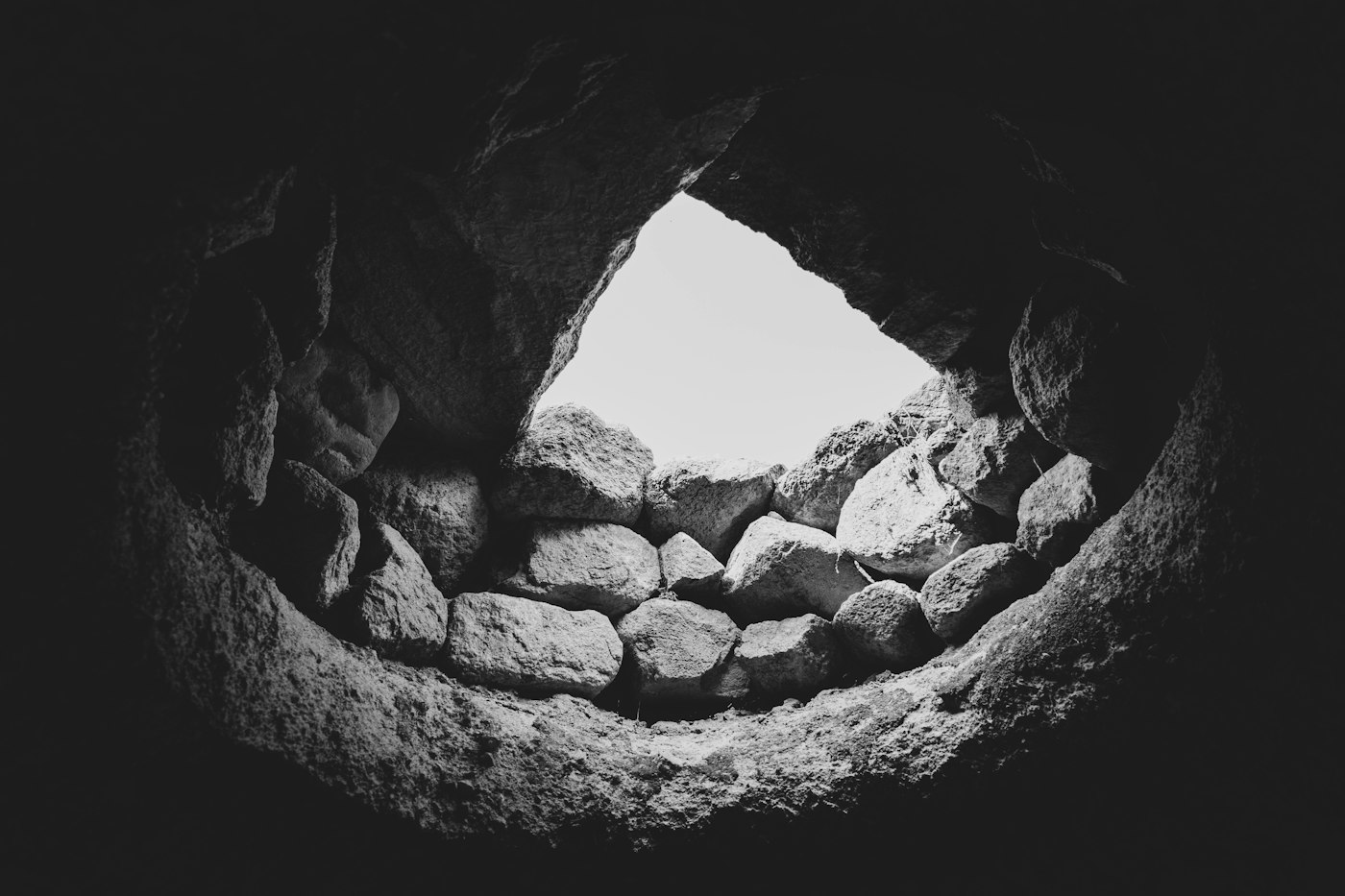
Between the cross and the empty tomb lies a day the Gospels barely describe. Jesus’ body lay in the grave. His followers hid. Nothing visible happened. Christians call it Holy Saturday, and it is the quietest day of the church year. Yet that silence has something to teach, because most of us spend more of our lives waiting than celebrating.
What Scripture Records
The Gospels give only glimpses of the day. The women who had followed Jesus from Galilee saw where He was buried and then “rested the sabbath day according to the commandment” (Luke 23:56, KJV). The religious leaders went to Pilate, worried that the disciples might steal the body, and secured the tomb with a seal and a guard (Matthew 27:62-66). The disciples themselves do not appear at all. They were somewhere behind locked doors, grieving and afraid (John 20:19).
That is nearly the whole record. A sealed stone, a guard, a Sabbath, and a group of people whose world had ended.
What the Disciples Did Not Know
It is important to read Holy Saturday from their side, not ours. We know what Sunday brings. They did not. Jesus had told them He would rise, but they had not understood, and on Saturday every fact in front of them said He was gone. The Messiah was dead. Rome had won. Three years of following had ended in a tomb.
Some of the Psalms give voice to what they must have felt. “How long, O LORD? wilt thou forget me for ever?” (Psalm 13:1). The disciples had no answer that day. Neither do we, in our own Saturdays.
Christ in the Grave
Christians have long reflected on what the Son of God was doing between death and resurrection. The Apostles’ Creed, in its traditional form, says He descended to the dead. Peter writes of Christ preaching to “the spirits in prison” (1 Peter 3:19), a verse believers have understood in different ways. What all agree on is this: Jesus truly died. He did not faint or pretend. He entered death completely, so that when He rose, death itself was defeated from the inside.
Psalm 16, quoted by Peter at Pentecost, speaks to this day: “thou wilt not leave my soul in hell; neither wilt thou suffer thine Holy One to see corruption” (Psalm 16:10; Acts 2:27). The body in the tomb was not abandoned.
The Spiritual Meaning of Waiting
Holy Saturday is the day for everyone who is living between a loss and a promise. The diagnosis has come and the healing has not. The prayer has been prayed and the answer has not. The relationship has broken and the reconciliation is nowhere in sight. Saturday is what faith feels like when God seems silent.
Lamentations, written in the ruins of Jerusalem, offers the Saturday posture: “It is good that a man should both hope and quietly wait for the salvation of the LORD” (Lamentations 3:26). Hope and quiet waiting. Not forced cheerfulness, and not despair.
Keeping the Day
- Stay quiet. Resist the urge to rush to Easter. Let the house be still. Fasting from noise can be as meaningful as fasting from food.
- Sit with the grief of the disciples. Read Luke 23:50-56 and imagine not knowing what comes next.
- Name your own Saturdays. Where are you waiting on God right now? Bring it to Him without demanding a timeline.
- Prepare for the vigil. Many churches gather after dark on Saturday for a service that moves from darkness to light, often with baptisms. Even at home, lighting a candle at nightfall can mark the turn.
The disciples thought Saturday was the end. It was the pause before the greatest beginning in history. God was not absent on Holy Saturday. He was working where no one could see, as He so often is.
Going Deeper: A Sabbath Like No Other
Holy Saturday fell on the Sabbath, the day God gave His people for rest. That detail carries quiet meaning. In the beginning, God finished His work of creation and rested on the seventh day (Genesis 2:2). Now Jesus had cried, “It is finished,” and His body rested in the tomb on the seventh day. The work of redemption was complete, and the new creation was about to begin on the first day of the week.
The women obeyed the commandment and rested, even though their hearts must have longed to go to the tomb with their spices. There is a lesson in their obedience. They kept faith with God on the worst day of their lives, not because they understood, but because He had said so. Sometimes faithfulness looks like simply doing the next right thing while we wait.
The seal and the guard
It is worth noticing who was most active on Holy Saturday: the enemies of Jesus. They remembered His words about rising again better than His friends did (Matthew 27:63). They sealed the stone and posted soldiers. Every precaution they took only made the coming resurrection harder to explain away. God often turns the plans of those who oppose Him into evidence for His own glory.
What Waiting Is Not
Many of us misunderstand waiting on God. A few common mistakes are worth naming:
- Waiting is not doing nothing. The women rested, but they also prepared spices. Faithful waiting keeps us ready.
- Waiting is not pretending. We do not have to act as if everything is fine. The psalms of lament show that honest grief is part of faith.
- Waiting is not proof that God has left. On Saturday, God seemed absent. He was nearer than anyone knew.
- Waiting is not forever. Saturday has an end. “Weeping may endure for a night, but joy cometh in the morning” (Psalm 30:5).
Questions Readers Ask
Why don’t the Gospels tell us more about this day?
Perhaps because, from the human side, there was little to tell. The silence of the text matches the silence of the day. The Gospel writers let us feel the emptiness before they show us the empty tomb.
Is it all right to feel hopeless on my own Saturdays?
Feelings of hopelessness are human, and the disciples surely felt them. God does not condemn us for grief. But we can bring those feelings to Him, as the psalmists did, and ask Him to hold on to us when we cannot hold on to hope. If your heaviness lingers, reach out to your pastor, a trusted friend, or a counselor; no one should wait alone.
How can I help someone who is in a Saturday season?
Be present more than you are wise. Sit with them. Bring a meal. Pray for them and with them if they welcome it. Resist the urge to explain their suffering. Like the women at the tomb, simply stay near.
Lord of the silent Saturday, meet us in our waiting. When we cannot see what You are doing, help us trust that You are still at work, and keep us until the morning comes. Amen.