
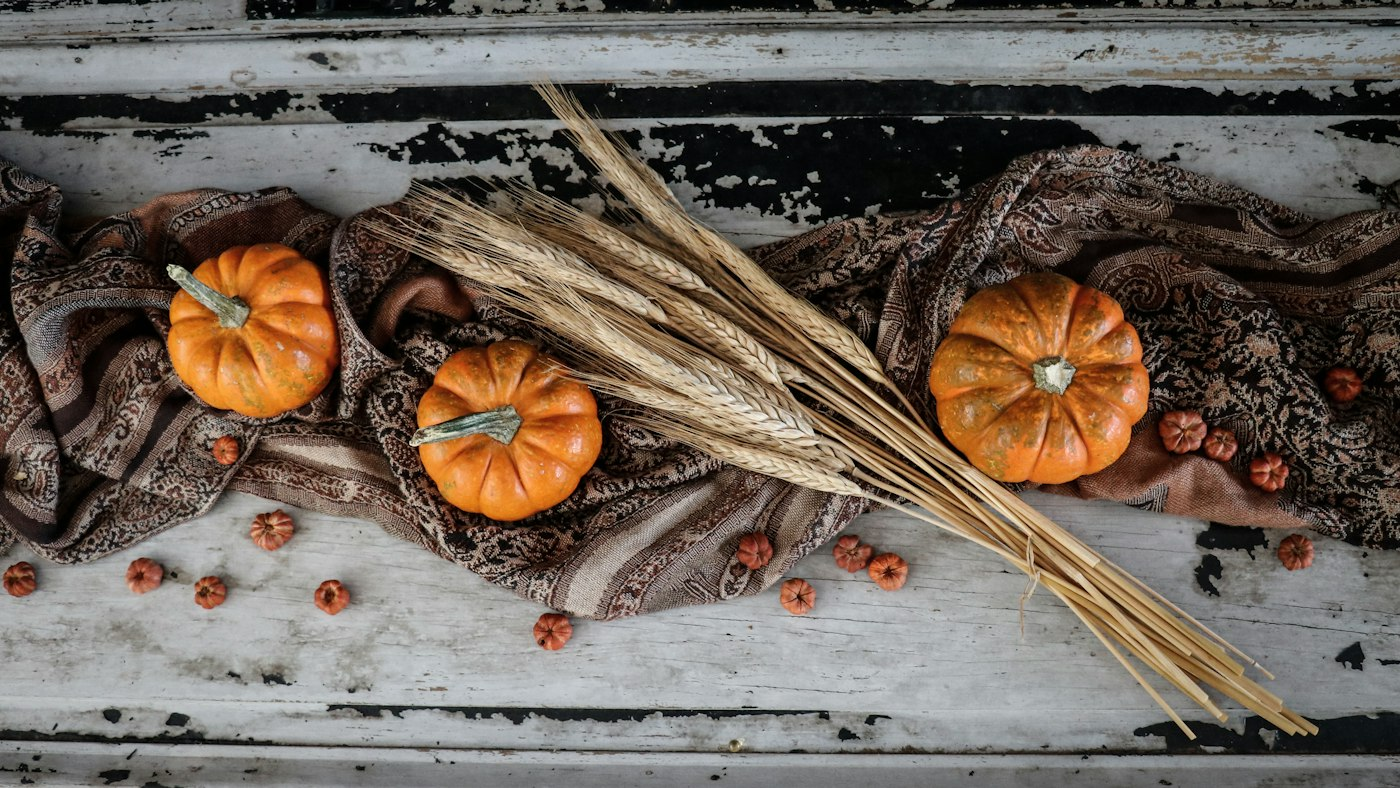
The farmers in my first congregation did not need a holiday to be thankful. They saw the harvest come in and knew Who sent the rain. I was a young pastor then, and I thought I was there to teach them about God. In many ways they taught me. They lived close to the ground and close to the weather, and that closeness gave them a kind of gratitude I have been trying to learn ever since. As Thanksgiving draws near, I find myself thinking about them and about the old idea of Harvest Home.
What “Harvest Home” Means
Long before there was a national Thanksgiving Day, farming communities marked the end of the harvest with celebration. In England the custom of “Harvest Home” celebrated bringing in the last of the crops. Churches held harvest festivals, decorating the sanctuary with produce and singing hymns of thanks. Many of our older hymns of thanksgiving come from that tradition, like “Come, Ye Thankful People, Come,” which begins, “All is safely gathered in, ere the winter storms begin.”
The idea is simple: the work is done, the food is stored, and now we stop to thank the One who made it possible. It is the same impulse behind our Thanksgiving, though for most of us the connection to the field has grown thin. We buy our food in packages and rarely think about the rain that grew it.
What Farmers Know About Gratitude
The farmers I knew understood something many of us forget. They could plow, plant, weed and tend with all their might, and it still was not enough. They needed rain at the right time and sun at the right time. They needed the frost to hold off. They needed protection from storms and pests. No amount of hard work could guarantee a harvest.
That kind of dependence breeds a natural humility. Paul put it well: “I have planted, Apollos watered; but God gave the increase” (1 Corinthians 3:6). The farmers I served knew that verse by experience before they knew it by heart.
James wrote, “Behold, the husbandman waiteth for the precious fruit of the earth, and hath long patience for it, until he receive the early and latter rain” (James 5:7). Patience, dependence, and gratitude were all part of the same life for them.
Who Sends the Rain
Scripture is clear about the source of the harvest. “He watereth the hills from his chambers: the earth is satisfied with the fruit of thy works. He causeth the grass to grow for the cattle, and herb for the service of man: that he may bring forth food out of the earth” (Psalm 104:13-14).
Psalm 65 is one of the great harvest psalms. It says, “Thou visitest the earth, and waterest it… thou preparest them corn… Thou crownest the year with thy goodness; and thy paths drop fatness” (Psalm 65:9-11). I love that phrase, “Thou crownest the year with thy goodness.” The harvest is God’s crown on the year.
Even Jesus pointed to the rain as a sign of God’s goodness to all: “for he maketh his sun to rise on the evil and on the good, and sendeth rain on the just and on the unjust” (Matthew 5:45). Every harvest, every meal, every grocery store shelf full of food is a gift of the Father’s kindness.
Paul told the people of Lystra that God “left not himself without witness, in that he did good, and gave us rain from heaven, and fruitful seasons, filling our hearts with food and gladness” (Acts 14:17). The harvest itself is a sermon about God.
Thankful Every Day, Not Only One Day
What struck me about those farmers was that their gratitude was not saved for a single Thursday in November. They thanked God when the rain came in July. They thanked Him when the corn came up straight. They thanked Him over every meal. Thanksgiving Day was not the beginning of their gratitude; it was just one more expression of it.
Most of us live differently. We may be grateful on Thanksgiving, but the rest of the year we take our daily bread for granted. Jesus taught us to pray, “Give us this day our daily bread” (Matthew 6:11). That prayer only makes sense if we see each day’s food as a gift.
Here are some ways to recover a little of that farmer’s gratitude in a modern life:
- Pray before every meal, and mean it. Think for a moment about where the food came from.
- Learn where your food is grown. Visit a farm stand or a farmers market. Talk to the people who grow what you eat.
- Grow something. Even a tomato plant on the porch teaches you how much is out of your control.
- Waste less. Gratitude shows itself in how we treat a gift.
- Share from your plenty. The Old Testament harvest laws told farmers to leave the edges of their fields for the poor (Leviticus 19:9-10). Give to a food pantry this season.
The Harvest Still to Come
The Bible also uses the harvest as a picture of something larger. Jesus said, “The harvest truly is plenteous, but the labourers are few; pray ye therefore the Lord of the harvest, that he will send forth labourers into his harvest” (Matthew 9:37-38). There is a harvest of souls that God is still bringing in.
And Scripture speaks of a final harvest at the end of the age, when the Lord gathers His people home. Then it will truly be Harvest Home, with all safely gathered in. That is the hope that makes every earthly harvest point beyond itself.
What to Do This Week
- Read Psalm 65 and Psalm 104 slowly, noticing every gift of the earth they name.
- At your next meal, pause and thank God by name for the rain, the soil and the hands that grew your food.
- Give something to a local food pantry before Thanksgiving.
- Sing or read “Come, Ye Thankful People, Come” this week.
- Pray for farmers and for all who work to put food on our tables.
Prayer: Lord, thank You for the harvest. Amen.