
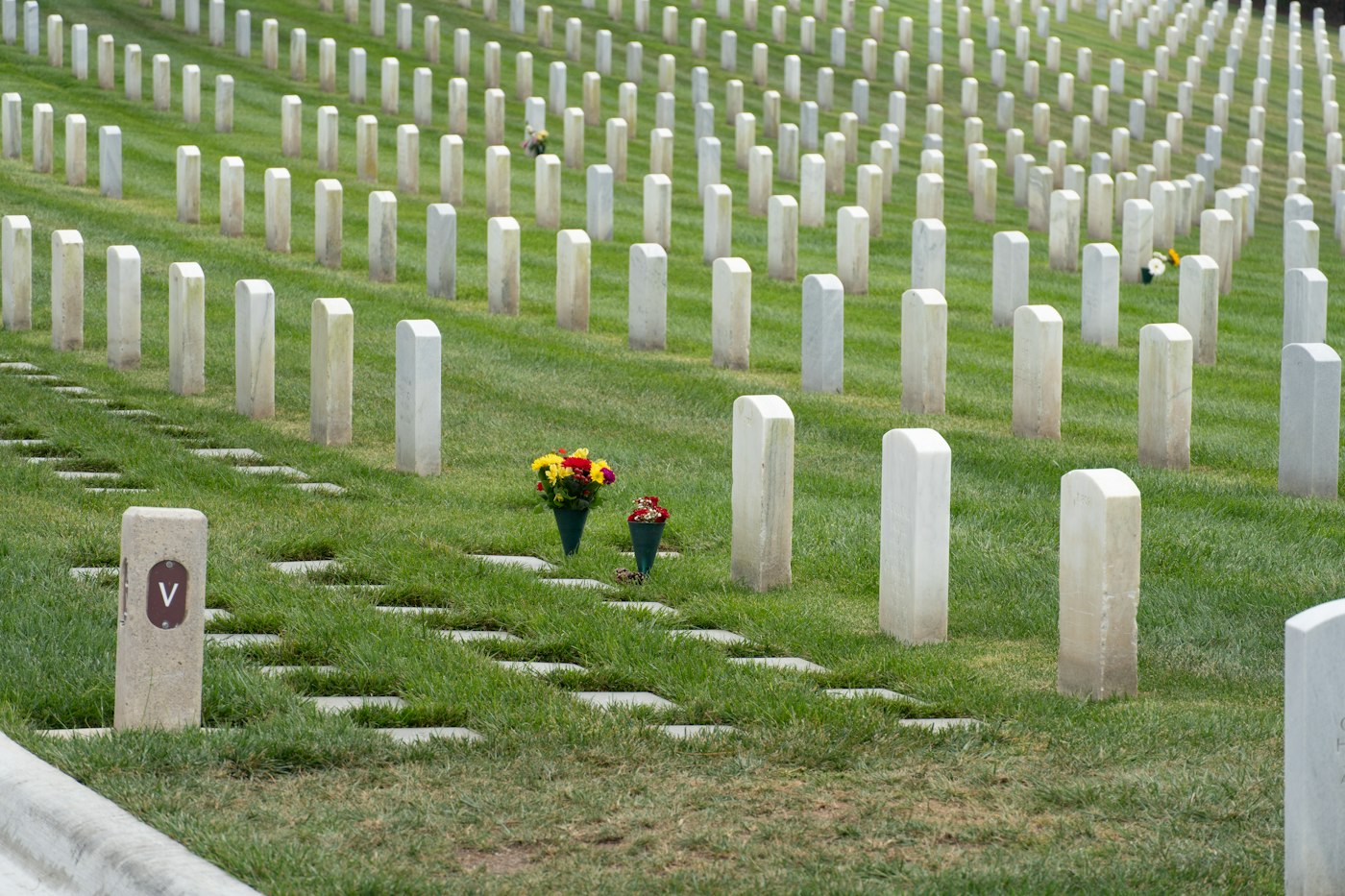
Memorial Day is easy to confuse with other holidays. It is not mainly about the start of summer, and it is not the day for honoring all veterans; that is Veterans Day in November. Memorial Day, observed on the last Monday in May, remembers Americans who died while serving in the armed forces. It grew out of the years after the Civil War, when communities decorated the graves of fallen soldiers with flowers, and for many years it was called Decoration Day.
For Christians, one verse often comes to mind on this day.
The Words Behind the Verse
“Greater love hath no man than this, that a man lay down his life for his friends” (John 15:13, KJV). Jesus spoke these words on the night before He died, in the upper room, to the disciples He was about to leave. He had just said, “This is my commandment, That ye love one another, as I have loved you” (John 15:12). Within hours He would show what that love looked like.
The verse is often inscribed on military memorials, and rightly so. It describes the highest form of human love: giving up your own life so that others may live.
Honoring Those Who Gave Their Lives
Scripture teaches us to “render therefore to all their dues… honour to whom honour” (Romans 13:7). Remembering those who died in service is a way of giving honor where it is due. Behind every name on a memorial is a family who received terrible news, and a life that ended far too soon.
Christians can honor that sacrifice without glorifying war. War is a sign of a broken world. Scripture looks forward to a day when “nation shall not lift up sword against nation, neither shall they learn war any more” (Isaiah 2:4). Until then, we can thank God for those who stood between their neighbors and harm.
An Even Greater Love
As great as it is to die for one’s friends, Scripture points to something greater still. Paul observed that “scarcely for a righteous man will one die… But God commendeth his love toward us, in that, while we were yet sinners, Christ died for us” (Romans 5:7-8).
Jesus did not die only for friends. He died for those who had not yet become His friends, even for His enemies. And unlike any soldier’s sacrifice, His death was followed by resurrection. His love does not end in a grave. It opens the grave for all who trust Him.
John draws the practical lesson: “Hereby perceive we the love of God, because he laid down his life for us: and we ought to lay down our lives for the brethren” (1 John 3:16). Most of us will never be asked to die for others. All of us are asked to give our lives away in daily, sacrificial love.
Ways to Observe the Day
- Pause to remember. Many Americans observe a moment of silence at 3 p.m. local time.
- Visit a cemetery or memorial. Read the names. Bring children and tell them why.
- Reach out to Gold Star families. A note to a family who lost a loved one in service can mean a great deal.
- Pray. Pray for grieving families, for those serving now and for peace.
- Remember the greater love. Let the sacrifice of others turn your heart to the sacrifice of Christ.
Going Deeper: Love in the Upper Room
The setting of John 15:13 deserves a closer look. Jesus had just described Himself as the vine and His disciples as the branches. Then He said something astonishing: “Henceforth I call you not servants; for the servant knoweth not what his lord doeth: but I have called you friends” (John 15:15). Within moments of calling them friends, He spoke of laying down His life for His friends. He was describing what He was about to do for them.
That gives the verse a layered meaning on Memorial Day. We rightly apply it to those who died for their country, and their sacrifice reflects something of the love Jesus described. But the verse first points to Christ Himself, who did not merely risk His life but deliberately gave it. “No man taketh it from me, but I lay it down of myself” (John 10:18).
Remembering in Scripture
The Bible gives a high place to remembering the dead with honor. David lamented Saul and Jonathan with a song he commanded to be taught to the people (2 Samuel 1:17-27). “How are the mighty fallen in the midst of the battle!” he cried (2 Samuel 1:25). Grief for the fallen is not unspiritual. It is part of loving well.
Teaching Children the Meaning of the Day
Memorial Day can be a meaningful teaching opportunity for families. Here are some age-appropriate ideas:
- Young children: Explain simply that some people gave their lives to protect others. Let them help place flowers or a small flag where it is permitted.
- Older children: Read the names on a local memorial together. Talk about the families those people left behind.
- Teenagers: Discuss what it means to sacrifice for others, and connect it to John 15:13 and to the cross. Ask what sacrificial love might look like in their own friendships.
- All ages: Pray together for Gold Star families and for those serving today.
Laying Down Your Life in Small Ways
John says we ought to lay down our lives for the brethren. For most of us, that happens not in one moment but in thousands of small choices:
- Giving up your plans to help a neighbor in need.
- Caring patiently for an aging parent or a sick spouse.
- Choosing to forgive when you have been wronged.
- Putting a friend’s needs ahead of your own comfort.
- Spending time with someone who is lonely when you would rather rest.
None of these will be engraved on a monument. But each one reflects the love of Christ, and none of them goes unseen by God.
Questions Readers Ask
Is it appropriate to talk about Jesus on Memorial Day?
Many believers find it natural. The day honors sacrificial love, and Christians see the fullest expression of that love at the cross. It is important, though, to honor the fallen in their own right and not only as an illustration.
How can I support a Gold Star family without intruding?
A simple, handwritten note saying you remember their loved one is rarely unwelcome. Use the person’s name. Offer to listen if they want to talk, and respect their wishes if they would rather not.
Lord, we thank You for those who gave their lives for others, and we pray for the families who still feel their absence. Most of all, we thank You for the greater love of Christ, who laid down His life for us. Amen.