
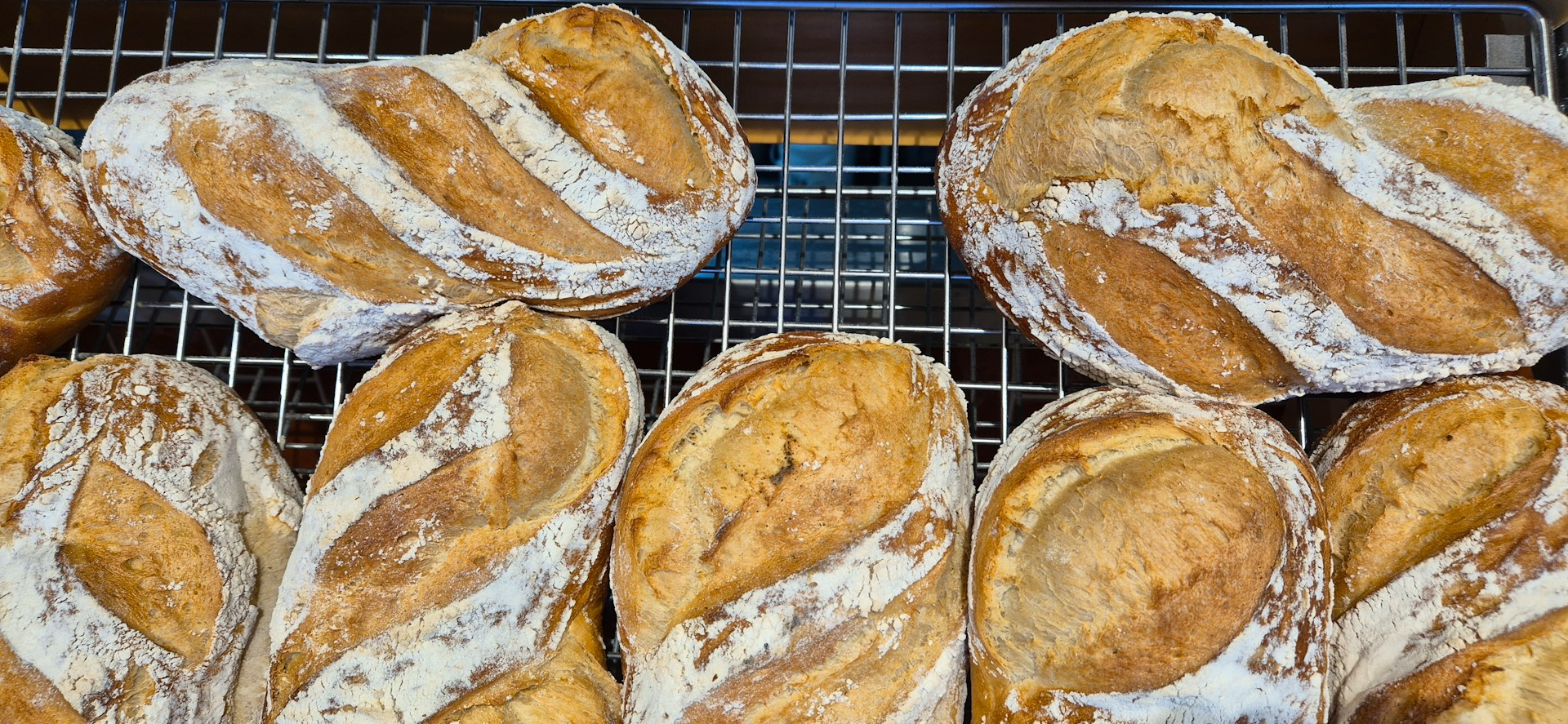
Summer is the season of picnics, cookouts and church dinners on the grounds. It is a good time to remember the most famous outdoor meal in the Bible. The feeding of the five thousand is the only miracle, apart from the resurrection, recorded in all four Gospels. John’s account in John 6:1-14 includes details the others leave out, and they speak directly to anyone who has ever felt that what they have is not enough.
A Test for Philip
A great crowd followed Jesus to a hillside near the Sea of Galilee. Seeing them coming, Jesus turned to Philip: “Whence shall we buy bread, that these may eat?” John adds, “And this he said to prove him: for he himself knew what he would do” (John 6:5-6, KJV).
Philip did the math: “Two hundred pennyworth of bread is not sufficient for them, that every one of them may take a little” (John 6:7). The penny here was the denarius, about a day’s wage for a laborer, so two hundred of them was most of a year’s income. Philip’s arithmetic was correct. His conclusion was that the situation was impossible.
Jesus already knew what He would do. The question was not for His information but for Philip’s growth.
A Boy’s Lunch
Andrew found something: “There is a lad here, which hath five barley loaves, and two small fishes: but what are they among so many?” (John 6:9). Barley bread was the inexpensive bread of ordinary people. The fish were probably small preserved fish to eat with it. It was a child’s lunch.
Andrew’s question, “what are they among so many?”, is one we ask often. What is my small gift against such a large need? What difference can my time, my money or my energy make?
Jesus Gave Thanks
Jesus had the people sit down on the grass. “And Jesus took the loaves; and when he had given thanks, he distributed to the disciples, and the disciples to them that were set down; and likewise of the fishes as much as they would” (John 6:11).
He did not complain about the small amount. He gave thanks for it. Then He used the disciples to distribute it. The miracle happened as the food passed from His hands through theirs. Everyone ate “as much as they would.” This was not a token meal. It was abundance.
Nothing Lost
Then comes a detail only John records: “When they were filled, he said unto his disciples, Gather up the fragments that remain, that nothing be lost” (John 6:12). They filled twelve baskets with leftovers. The Lord of abundance is also the Lord who wastes nothing.
The next day Jesus explained what the sign meant: “I am the bread of life: he that cometh to me shall never hunger; and he that believeth on me shall never thirst” (John 6:35). The miracle pointed beyond physical bread to Himself.
What This Means for Us
- Jesus sees needs before we do. He raised the question before anyone else.
- Our math is not the final word. Philip’s calculations were right, and beside the point.
- Small offerings matter in His hands. A boy’s lunch fed a multitude.
- Gratitude comes first. Jesus thanked God for the little before it became much.
- We are distributors, not sources. Our job is to pass along what He provides.
At your next summer meal, give thanks as Jesus did. Then ask Him what small thing He might want you to place in His hands.
Going Deeper: The Feeding in Its Setting
John tells us that “the passover, a feast of the Jews, was nigh” (John 6:4). That detail is not accidental. Passover remembered how God brought Israel out of Egypt, and the wilderness journey that followed was marked by the daily gift of manna, bread from heaven. A crowd in a remote place, fed by God with bread, at Passover time: the people would have made the connection.
They did. After the meal, they said, “This is of a truth that prophet that should come into the world” (John 6:14). They were thinking of Moses’ promise that God would raise up a prophet like him (Deuteronomy 18:15). Some wanted to make Jesus king by force, and He withdrew to a mountain alone (John 6:15). The next day, Jesus explained that He was not just a new Moses who could provide bread. He was the true bread from heaven Himself (John 6:32-35).
Andrew the bringer
It is worth noticing that Andrew is the one who brought the boy to Jesus. Earlier in John’s Gospel, Andrew was the one who brought his brother Simon Peter to Jesus (John 1:41-42). Later, he and Philip brought some Greeks who wanted to see Jesus (John 12:20-22). Andrew is never the center of attention, but again and again he brings people to Jesus. That is a calling any of us can share.
Putting It Into Practice
The feeding of the five thousand speaks to many situations where our resources feel small. A few ways to apply it:
- Name your “five loaves.” What do you have in hand right now: a skill, a little time, a modest gift, a listening ear? Write it down.
- Offer it in prayer. Tell God plainly, “This is all I have. It is yours.”
- Give thanks before you see results. Follow Jesus’ pattern of gratitude for the little.
- Serve in a team. The disciples distributed the food together. Find others to work alongside.
- Gather the fragments. Look for ways to waste less: leftover food shared with a neighbor, unused clothing given away, idle time redeemed for prayer.
- Feed someone this summer. Host a cookout, take a meal to a family or support a local food pantry.
Questions Readers Ask
Why did Jesus test Philip?
To stretch his faith. Philip was from nearby Bethsaida (John 1:44) and might have known where to find food. Jesus wanted him to see that the answer lay not in the local markets but in the One standing beside him.
Were there really five thousand people?
The Gospels count five thousand men, and Matthew adds “beside women and children” (Matthew 14:21). The total crowd was likely much larger. It was an enormous gathering in an out-of-the-way place.
What do the twelve baskets mean?
Some see a link to the twelve tribes of Israel or the twelve apostles. At the very least, they show that Jesus provided more than enough, with every disciple carrying a basket of evidence of His abundance.