
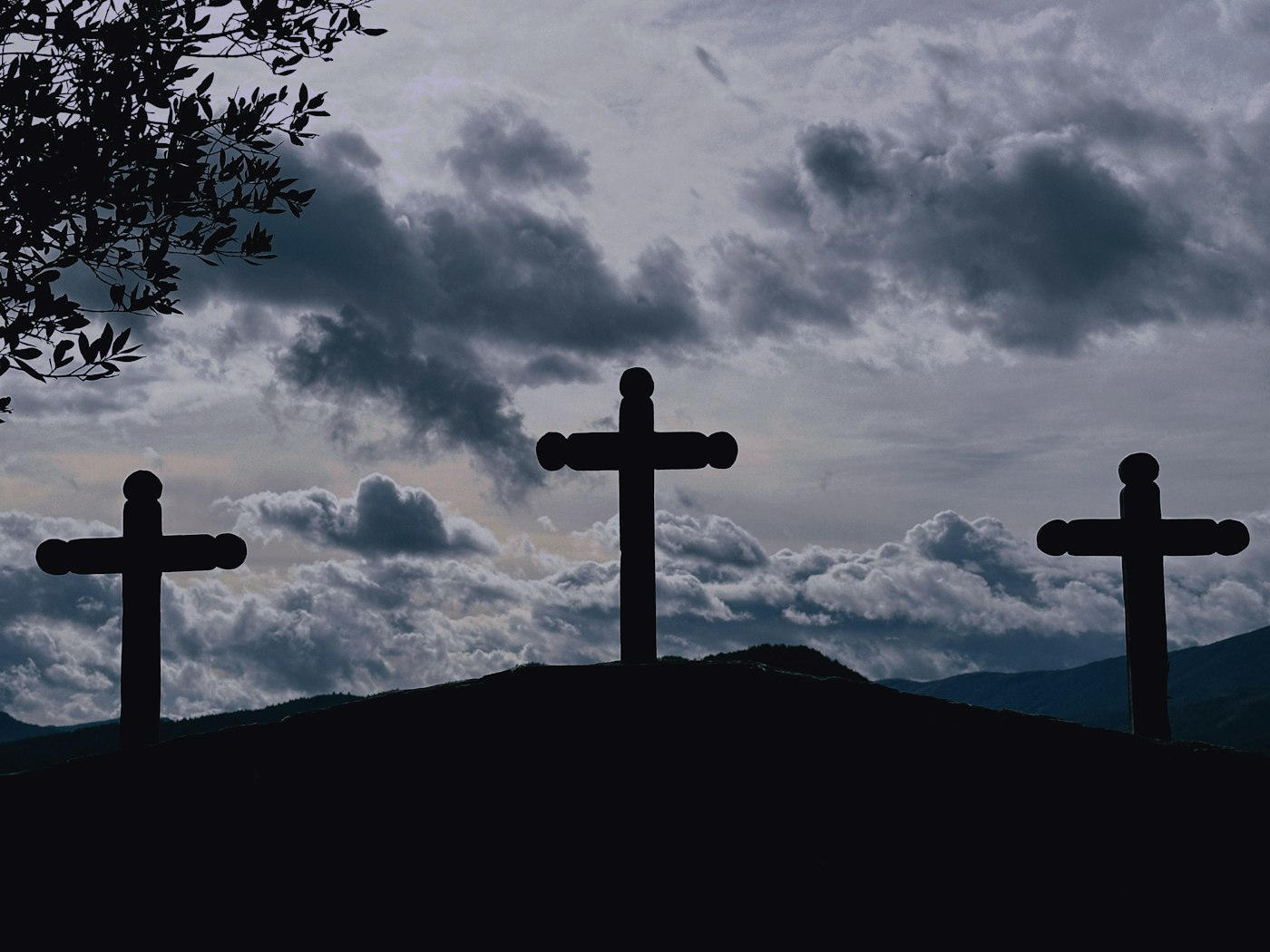
The Gospels record seven sayings of Jesus from the cross. No single Gospel has all of them; together they give us a window into the mind of Christ during the hours He hung there. Christians have meditated on these words for centuries, and many Good Friday services are built around them. Here they are in the traditional order, with a brief reflection on each.
Words of Forgiveness and Promise
“Father, forgive them; for they know not what they do” (Luke 23:34, KJV). The first recorded words from the cross are a prayer, and the prayer is for His executioners. Jesus had taught His followers to love their enemies and pray for those who persecuted them. Here He did it, with nails in His hands.
“Verily I say unto thee, To day shalt thou be with me in paradise” (Luke 23:43). Spoken to a dying criminal who had asked only to be remembered. Jesus, in the act of saving the world, took time to save one man beside Him. Grace has never been more clearly shown.
Words of Care and Anguish
“Woman, behold thy son! … Behold thy mother!” (John 19:26-27). Seeing His mother and the disciple John at the foot of the cross, Jesus entrusted them to each other. In His own agony He arranged for the care of the woman who had raised Him. The commandment to honor father and mother was kept to the last breath.
“My God, my God, why hast thou forsaken me?” (Matthew 27:46; Mark 15:34). The fourth word is the darkest. Jesus quoted the opening of Psalm 22, a psalm that describes suffering in detail and ends in praise. Whatever else it means, it tells us that He truly bore the weight of sin. He was not pretending to suffer.
Words of Need and Completion
“I thirst” (John 19:28). Two words that insist on His full humanity. The One who offered living water to the woman at the well was parched. John notes that this fulfilled Scripture; Psalm 22:15 describes a tongue cleaving to the jaws. God did not save us from a safe distance.
“It is finished” (John 19:30). In the original language this is a single word, one that could be written on a bill that had been paid in full. It is not the cry of a defeated man saying “I am finished.” It is the declaration of a victor saying the work is done. Everything the Father sent Him to accomplish had been accomplished.
The Final Word of Trust
“Father, into thy hands I commend my spirit” (Luke 23:46). The last word echoes Psalm 31:5. Jesus did not have His life taken from Him; He gave it up, deliberately, into the hands of the Father He had called to moments before. The relationship was intact. The darkness had not won. He died as He lived, trusting the Father completely.
Praying the Seven Words
Many believers find it meaningful to spend part of Good Friday with these sayings. A simple approach:
- Read each saying slowly in its Gospel context, noticing who is nearby and what is happening.
- Pause after each one for a minute of silence.
- Ask what the word reveals about Jesus, and what it asks of you.
- Pray a sentence in response: thanksgiving, confession or trust.
Some churches hold a service from noon to three on Good Friday, the hours of the crucifixion, with a reflection on each word. Composers through the centuries have set the seven words to music. However you approach them, they repay attention. In seven short sentences, the dying Jesus forgave, saved, cared, suffered, thirsted, finished and trusted. It is the whole gospel, spoken from the cross.
Going Deeper: Why the Order Matters
The traditional order of the seven words is drawn by placing the sayings from the different Gospels in the sequence the narratives suggest. Luke records three, John records three, and Matthew and Mark share one. Read together, they move in a striking arc: they begin with others and end with the Father. First Jesus prays for His enemies, then speaks to a thief, then provides for His mother. Only after caring for everyone else does He voice His own anguish and need. And at the very end, He turns entirely toward God.
That shape tells us a great deal about love. Even in dying, Jesus looked outward first. His own suffering came last on His list.
The darkness at noon
Matthew, Mark and Luke all record that darkness covered the land from the sixth hour to the ninth, roughly noon until three in the afternoon (Matthew 27:45; Mark 15:33; Luke 23:44). The cry of forsakenness comes at the end of that darkness. Whatever else the darkness meant, it was a sign that something cosmic was taking place. The Light of the world was bearing the weight of the world’s sin.
A Simple Plan for Good Friday at Home
Not everyone can attend a three-hour service. Here is a way to keep the day with family or alone, even if you only have an hour:
- Choose a quiet space. Turn off the television and set phones aside. A single candle or a simple cross on the table can help focus the heart.
- Divide the time into seven parts. If you have an hour, give each word about eight minutes.
- Read, then wait. Have one person read the saying and its surrounding verses. Then sit in silence for a minute or two.
- Respond with one sentence. Each person may offer a short prayer, or simply say what struck them.
- Sing or hear a hymn. Old hymns of the cross, like “When I Survey the Wondrous Cross” or “The Old Rugged Cross,” fit naturally between the words.
- End in quiet. After the seventh word, let the silence stand. Do not rush to Easter yet.
Questions Readers Ask
Did God really forsake Jesus?
Christians have wrestled with this question for centuries. What we can say with confidence is that Jesus truly experienced the weight of separation that sin brings, because He was bearing our sin (2 Corinthians 5:21). Yet He still prayed, “My God,” and His final word was “Father.” The bond between the Father and the Son was never broken in the deepest sense, even as He tasted what we deserved.
Why does “I thirst” matter?
It reminds us that Jesus was not a spirit pretending to have a body. He was fully human, with real needs and real pain. Hebrews tells us He was “in all points tempted like as we are” (Hebrews 4:15). When we suffer, we pray to Someone who understands.
What should I take away from the seven words?
Perhaps this: the cross is not only something Jesus did for us. It also shows us how to live and how to die. Forgive. Welcome the repentant. Care for your family. Be honest with God in your pain. Admit your need. Finish your work. And commit your spirit into the Father’s hands.