
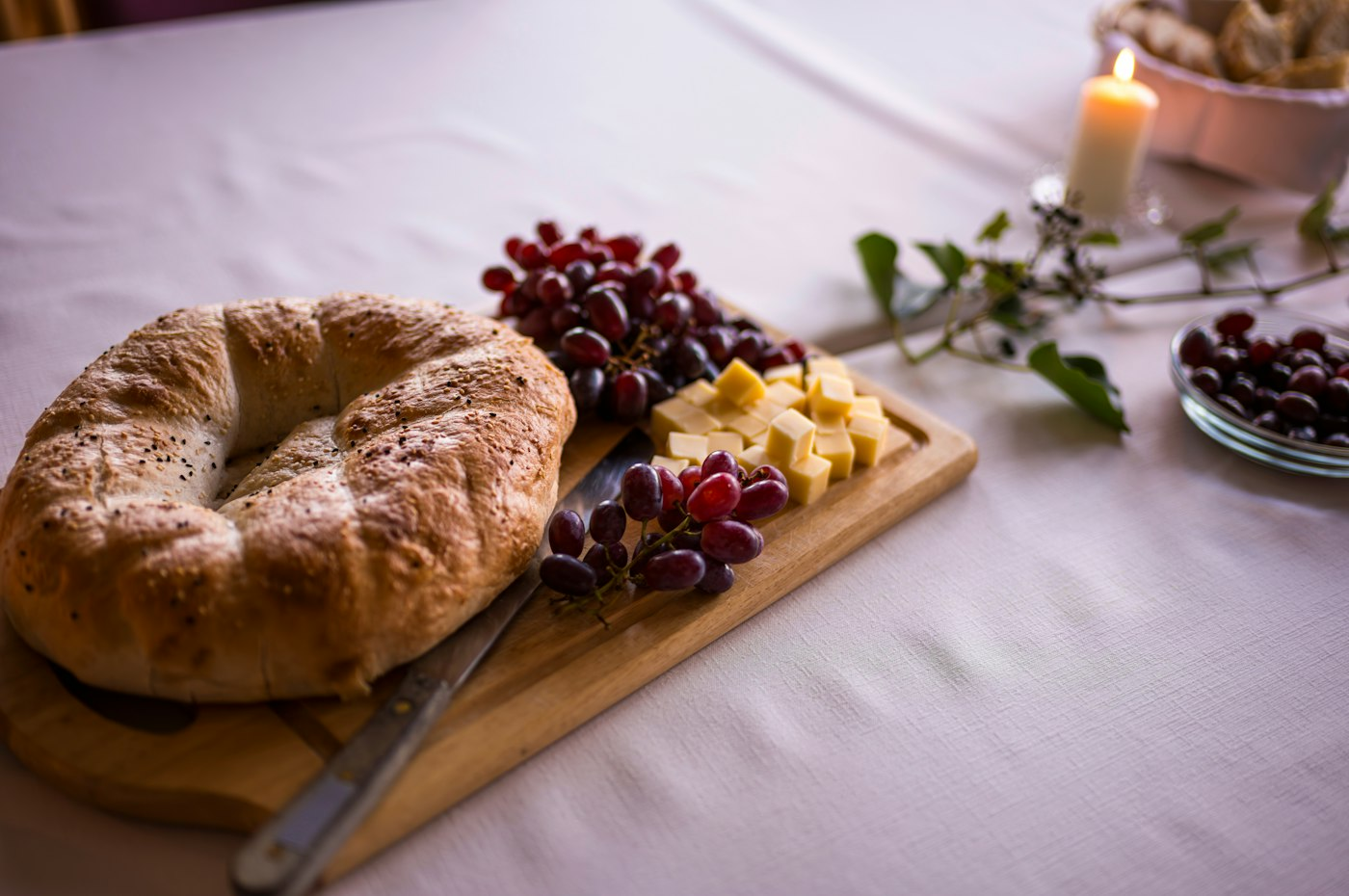
On the night before He died, Jesus did not invent a new ceremony from scratch. He sat down with His disciples to eat the oldest meal in Israel’s history, and in the middle of it He changed its meaning forever. To understand the Lord’s Supper, you have to understand the Passover table it was served on.
The First Passover
Exodus 12 tells the story. On the night God delivered Israel from Egypt, each household was to kill a lamb without blemish, put its blood on the doorposts, and eat the meat roasted, with unleavened bread and bitter herbs. “And the blood shall be to you for a token upon the houses where ye are: and when I see the blood, I will pass over you” (Exodus 12:13, KJV). Judgment fell on Egypt; the homes marked by the lamb’s blood were spared.
God commanded that the meal be kept every year as a memorial, so that each generation would tell the next, “It is the sacrifice of the LORD’s passover” (Exodus 12:27).
The Meal in Jesus’ Day
By the first century, the Passover meal had a familiar shape. The lamb was sacrificed at the temple. The family gathered after sundown. Unleavened bread recalled the haste of leaving Egypt, bitter herbs recalled the bitterness of slavery, and cups of wine were shared with blessings. The story of the Exodus was retold, and psalms of praise were sung, including Psalms 113 through 118.
Every element pointed back to one night of rescue.
What Jesus Did With It
Luke tells us how much Jesus wanted this meal: “With desire I have desired to eat this passover with you before I suffer” (Luke 22:15). Then, at two points in the familiar ritual, He did something unprecedented.
He took the bread, gave thanks, broke it, and said, “This is my body which is given for you: this do in remembrance of me” (Luke 22:19). After supper He took the cup and said, “This cup is the new testament in my blood, which is shed for you” (Luke 22:20). The bread that had recalled Egypt now pointed to His body. The cup that had celebrated the old covenant now sealed a new one. The lamb whose blood had marked the doors was about to be replaced by the Lamb Himself.
Paul, passing on what he received, adds Jesus’ purpose: “as often as ye eat this bread, and drink this cup, ye do shew the Lord’s death till he come” (1 Corinthians 11:26). Like Passover, the Supper looks back to a rescue. Unlike Passover, it also looks forward to a return.
A Hymn Before the Garden
Matthew notes that “when they had sung an hymn, they went out into the mount of Olives” (Matthew 26:30). The hymn would have been from the Passover psalms, and Psalm 118 ends the set: “O give thanks unto the LORD; for he is good: for his mercy endureth for ever” (Psalm 118:29). Jesus sang those words and then walked to Gethsemane.
Coming to the Table
Christians differ in how they understand and practice the Lord’s Supper, and this is not the place to settle those questions. But all can agree on what the Passover background teaches:
- It is a memorial of a real rescue. Just as Israel remembered a real night in Egypt, we remember a real death outside Jerusalem.
- It is for a people, not just individuals. Passover was eaten in households. The Supper is eaten by the family of God.
- It is a taste of deliverance, not just a lesson about it. We eat and drink because the rescue is meant to be received, not only understood.
Maundy Thursday brings us back to that upper room. The oldest meal in Israel found its fulfillment there, and every Communion since has been an echo of it.
Going Deeper: The Lamb Running Through the Whole Bible
When John the Baptist first saw Jesus coming toward him, he said, “Behold the Lamb of God, which taketh away the sin of the world” (John 1:29). Anyone raised on the Passover would have caught the echo. From that moment on, the Gospels quietly connect Jesus to the lamb of Exodus 12.
One connection is especially striking. The Passover lamb was to be eaten without breaking any of its bones: “neither shall ye break a bone thereof” (Exodus 12:46). When the soldiers came to break the legs of the crucified men, they found Jesus already dead and did not break His. John writes that this happened “that the scripture should be fulfilled, A bone of him shall not be broken” (John 19:36).
Paul draws the line plainly: “For even Christ our passover is sacrificed for us” (1 Corinthians 5:7). And the last book of the Bible shows the redeemed of every nation gathered around “a Lamb as it had been slain” (Revelation 5:6). The story that began with blood on the doorposts of Egypt ends with the Lamb on the throne.
Putting It Into Practice: Preparing Your Heart for the Table
Paul tells the Corinthians, “But let a man examine himself, and so let him eat of that bread, and drink of that cup” (1 Corinthians 11:28). That is not meant to frighten us away. It is an invitation to come thoughtfully. Here is a simple way to prepare the next time your church shares Communion:
- Remember the rescue. Read Exodus 12 or one of the Gospel accounts of the Last Supper the day before. Let the story be fresh in your mind.
- Confess honestly. Ask the Lord to show you anything you have been holding onto. The Israelites cleared leaven out of their houses before Passover. We can clear out sin by bringing it to Him.
- Make things right where you can. Jesus taught that if a brother has something against us, we should go and be reconciled (Matthew 5:23-24). If there is a call you need to make, make it.
- Give thanks. The word Eucharist, which some churches use for the Supper, comes from the Greek word for giving thanks. Jesus gave thanks before He broke the bread.
- Look forward. “Till he come.” The table is a promise as well as a memorial.
A Word for Families
Passover was always a meal where children asked questions and parents answered them (Exodus 12:26-27). That is a beautiful model for Christian homes. When children ask why we take Communion, it is a perfect opening to tell them the story of the lamb, the doorposts and the cross. You do not have to be a Bible scholar. You only have to tell them what the Lord has done.
Questions Readers Ask
Was the Last Supper actually a Passover meal?
Matthew, Mark and Luke clearly present it as a Passover meal. John’s Gospel has some details about timing that scholars have discussed for centuries. Believers hold different views on how those accounts fit together, but all four Gospels place the Supper and the cross in the Passover season and make the connection unmistakable.
What was the “cup of blessing”?
Paul uses that phrase in 1 Corinthians 10:16. In Jewish meal tradition, blessings were spoken over cups of wine, and later Jewish writings describe several cups shared during the Passover meal. Luke mentions a cup before the bread and a cup “after supper,” which fits that pattern.
Why do we keep doing this?
Because Jesus told us to: “this do in remembrance of me.” Remembering in Scripture is more than recalling a fact. It means bringing a past act of God into the present with thankfulness, and letting it shape how we live today.