
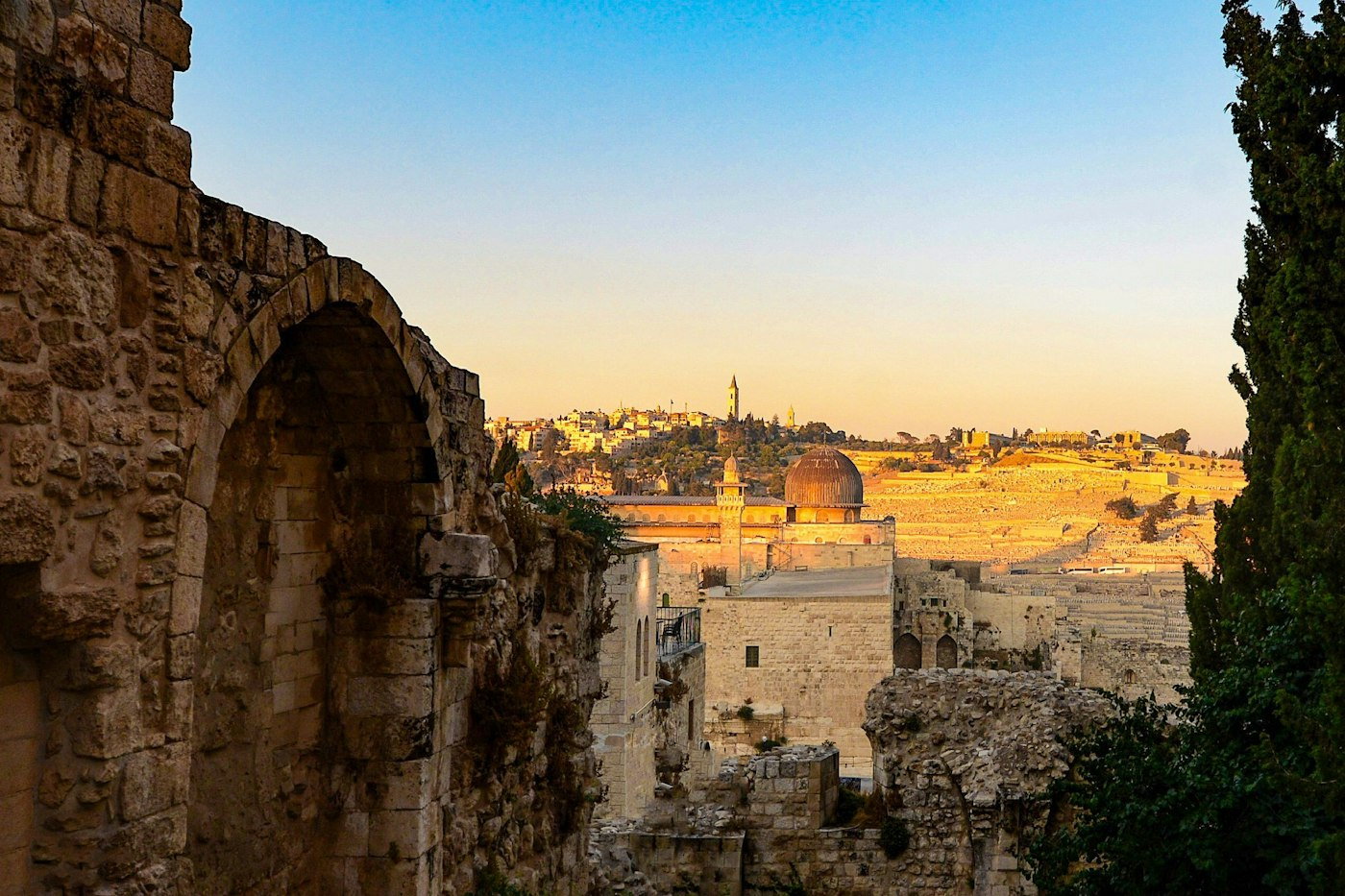
Palm Sunday is remembered as a day of celebration, and it was. But Luke records a moment in the middle of the procession that most Palm Sunday services pass over quickly. As Jesus came around the bend of the Mount of Olives and the city spread out before Him, with the crowd still shouting, He wept. His tears tell us something about the heart of God that the palm branches alone cannot.
The Scene
“And when he was come near, he beheld the city, and wept over it, Saying, If thou hadst known, even thou, at least in this thy day, the things which belong unto thy peace! but now they are hid from thine eyes” (Luke 19:41-42, KJV).
The road from Bethany to Jerusalem crosses the Mount of Olives, and at the summit the whole city comes into view: the walls, the temple gleaming in the sun, the crowded streets filled with Passover pilgrims. It was a sight that moved every Jewish traveler. For Jesus, it moved Him to grief.
Why He Wept
The word Luke uses for weeping is strong; it describes open, audible sorrow. Jesus was not misty-eyed. He was mourning.
He wept because the city did not recognize what was happening. The King had come, and Jerusalem did not know “the time of thy visitation” (Luke 19:44). The crowd was cheering, but the city as a whole, and especially its leaders, would reject Him within days. The peace He offered was being refused by the very people who most needed it.
He also wept because He could see what was coming. Luke 19:43-44 describes a siege: enemies surrounding the city, casting up a bank against it, and leaving not one stone upon another. Jesus saw the suffering His people would endure, and it broke His heart even as they celebrated.
A Pattern of Tears
This was not the first time Jesus had grieved over Jerusalem. Earlier in Luke, He had cried out, “O Jerusalem, Jerusalem, which killest the prophets, and stonest them that are sent unto thee; how often would I have gathered thy children together, as a hen doth gather her brood under her wings, and ye would not!” (Luke 13:34). The image is tender and maternal. God’s desire for His people is to gather and protect, and their refusal wounds Him.
The Gospels record Jesus weeping at the tomb of Lazarus (John 11:35) and here over the city. In both cases, the tears are over the damage sin and death do to people He loves.
What the Tears Teach Us
- God is not indifferent to rejection. Jesus did not shrug at Jerusalem’s unbelief. He grieved it. Judgment in Scripture is never cold; it comes from a heart that wanted something else.
- Celebration and sorrow can coexist. The crowd was right to praise, and Jesus was right to weep. Mature faith can hold both: real joy in what God is doing, real grief over those who are missing it.
- There is a “day” of visitation. Jesus speaks of “this thy day,” a time when peace was within reach. Scripture urges us not to assume the opportunity will always be there: “To day if ye will hear his voice, harden not your hearts” (Hebrews 3:15).
- Love weeps before it warns. Jesus wept before He spoke of judgment. Those who speak hard truths should do so with the same tears.
Weeping With Him
Palm Sunday invites us to join the crowd in praise, and we should. It also invites us to stand beside Jesus on the Mount of Olives and see what He saw: a city full of people who did not know what they were missing. Most of us know such people. Some of us have been such people. The right response is His response: tears, and then a steady walk down the hill toward them, carrying the peace they do not yet know they need.
Going Deeper: Standing Where He Stood
Luke is careful with his geography. He tells us Jesus had come to “the descent of the mount of Olives” when the crowd began to rejoice (Luke 19:37), and then that He “was come near” and “beheld the city” (Luke 19:41). The tears came at the very place where the view opened up. It was the moment of greatest beauty, and it was the moment of greatest sorrow.
There is something in that for us. Sometimes it is when we see most clearly that we feel most deeply. Jesus did not weep because He was confused about what was happening. He wept because He saw it all.
“The things which belong unto thy peace”
The name Jerusalem has long been associated with the Hebrew word for peace, shalom. Whether or not Jesus had that in mind, the irony is plain. The city whose very name spoke of peace did not recognize the Prince of Peace when He came riding toward its gates (Isaiah 9:6). What it most needed was right in front of it, and it was hidden from its eyes.
Putting It Into Practice
If we want to share Jesus’ heart for the people around us, a few habits can help:
- Look at your own “city.” Take a walk or a drive through your neighborhood or town and pray as you go. Notice the homes, the schools, the places of business. Ask God to let you see them as He does.
- Grieve before you judge. When you hear news that troubles you, let your first response be prayer, not commentary. Jesus’ tears came before His warnings.
- Name a few people. Write down two or three names of people who do not yet know the peace of Christ. Pray for them by name this week.
- Do not lose the joy. Jesus did not tell the crowd to stop. When the Pharisees asked Him to rebuke them, He said the stones would cry out instead (Luke 19:40). Our sorrow for others should never silence our praise.
Questions Readers Ask
Why did Jesus weep if He knew He would be raised?
Knowing the end of the story did not make Him unmoved by the pain along the way. At Lazarus’ tomb He knew He would raise His friend in minutes, and still He wept (John 11:35). His tears show us that God’s sovereignty and His compassion are not in competition.
Is it wrong to feel sad on a celebration day?
Not at all. Many people come to Palm Sunday or Easter carrying grief. Jesus Himself wept in the middle of a parade. You are in good company if your heart holds both joy and sorrow at once.
What does “the time of thy visitation” mean for us?
In Scripture, a “visitation” is a time when God comes near to act. Every generation has its moments when the invitation of Christ is especially clear. The call is to respond while the door is open, not to put it off for a day that may not come.
Lord Jesus, give us eyes to see our neighbors as You saw Jerusalem, and hearts soft enough to weep for them. Then send us down the hill with Your peace in our hands. Amen.