
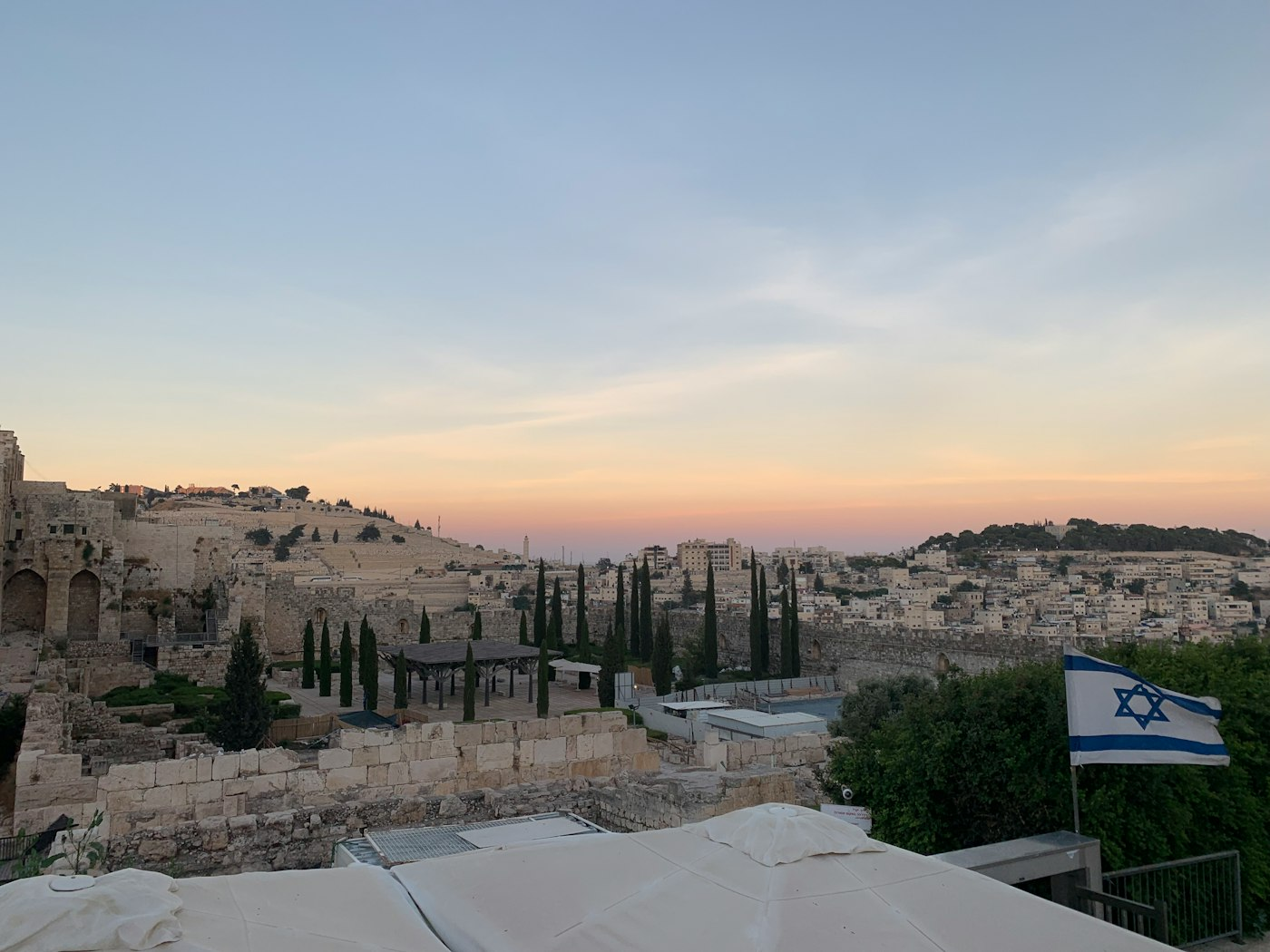
Nearly half of Luke’s Gospel takes place on a journey. From Luke 9:51 to the Palm Sunday procession in chapter 19, Jesus is on the road to Jerusalem, and Luke reminds the reader again and again where the road leads. For Christians keeping Lent, this long section is a natural companion. We too are traveling toward Holy Week, and Luke shows what it means to walk with Jesus when He has already chosen the cross.
A Turning Point
“And it came to pass, when the time was come that he should be received up, he stedfastly set his face to go to Jerusalem” (Luke 9:51, KJV). The wording echoes Isaiah’s Servant, who said, “therefore have I set my face like a flint” (Isaiah 50:7). Jesus is not drifting toward trouble. He has decided.
Luke keeps the destination in view. “He went through the cities and villages, teaching, and journeying toward Jerusalem” (Luke 13:22). “Behold, we go up to Jerusalem” (Luke 18:31). Finally, “he went before, ascending up to Jerusalem” (Luke 19:28). The repetition is Luke’s way of saying that everything along the road is shaped by what waits at the end of it.
What Jesus Taught on the Way
Some of the most loved passages in the Bible come from this travel section:
- The parable of the Good Samaritan (Luke 10:25-37)
- Mary and Martha, and the “one thing” that is needful (Luke 10:38-42)
- The disciples’ request, “Lord, teach us to pray” (Luke 11:1-13)
- The lost sheep, the lost coin and the prodigal son (Luke 15)
- The Pharisee and the tax collector (Luke 18:9-14)
- Zacchaeus in Jericho, the last stop before Jerusalem (Luke 19:1-10)
Read together, these stories describe the kind of people Jesus was gathering: those who show mercy, who listen, who pray persistently, who know they are lost and let themselves be found.
The Cost of the Road
The journey also contains some of Jesus’ hardest sayings. Would-be followers are told that foxes have holes and birds have nests, “but the Son of man hath not where to lay his head” (Luke 9:58). A crowd is warned to count the cost before building (Luke 14:28-33). A rich ruler walks away sorrowful (Luke 18:23).
Jesus does not hide the destination from His followers. More than once in this section He tells them He will be rejected and killed and will rise again (Luke 9:22, 9:44, 18:31-33). They do not understand, but He tells them anyway, because honest disciples need to know where the road goes.
Walking the Road in Lent
One simple Lenten practice is to read Luke 9:51 through 19:44 slowly over the weeks before Easter, a chapter or less a day. As you read, keep a few questions in mind:
- Where does Jesus show mercy to someone others overlooked?
- What does He ask of those who want to follow Him?
- How does the coming cross shape His words in this passage?
By the time you reach the descent from the Mount of Olives and hear the crowd shouting “Blessed be the King that cometh in the name of the Lord” (Luke 19:38), you will have walked a long way with Him. That is what Lent is for. Jesus set His face toward Jerusalem for us. Following Him there, one chapter at a time, is a fitting way to prepare for Holy Week.
Going Deeper: Samaria at Both Ends of the Road
It is easy to overlook how Luke’s journey begins. Right after Jesus sets His face toward Jerusalem, He sends messengers ahead into a Samaritan village, and the villagers refuse to receive Him “because his face was as though he would go to Jerusalem” (Luke 9:53). James and John ask whether they should call down fire from heaven. Jesus turns and rebukes them, and they simply go on to another village (Luke 9:54-56).
That small scene sets the tone for the whole journey. Jesus meets rejection with patience, not revenge. And Samaritans keep appearing along the way. In the next chapter, the hero of His most famous parable is a Samaritan (Luke 10:33). Later, of ten lepers healed, only one comes back to give thanks, “and he was a Samaritan” (Luke 17:16). The people who first refused Him become, in Luke’s telling, examples of mercy and gratitude. The road to the cross is a road of grace for outsiders.
Why Jerusalem?
Luke’s Gospel begins in the temple in Jerusalem, with Zechariah serving at the altar, and it ends there too, with the disciples “continually in the temple, praising and blessing God” (Luke 24:53). The city stands at the center of his story.
Jesus Himself explains why the road must end there: “it cannot be that a prophet perish out of Jerusalem” (Luke 13:33). In the very next breath, He grieves over the city: “O Jerusalem, Jerusalem … how often would I have gathered thy children together, as a hen doth gather her brood under her wings, and ye would not!” (Luke 13:34). And when He finally comes over the Mount of Olives and sees it, “he beheld the city, and wept over it” (Luke 19:41).
The Savior who set His face like a flint also wept. Resolve and tenderness were not opposites in Him. He went toward Jerusalem because He loved the very people who would reject Him.
A Five-Week Reading Plan
If reading the whole section feels like a lot, here is one way to divide it over the weeks of Lent:
- Week one: Luke 9:51 to 11:13. The cost of following, the Good Samaritan, Mary and Martha, and the Lord’s Prayer.
- Week two: Luke 11:14 to 13:21. Warnings about hypocrisy, worry and readiness.
- Week three: Luke 13:22 to 15:32. The narrow door, the great banquet and the three parables of the lost.
- Week four: Luke 16:1 to 17:37. Money, forgiveness, faith and gratitude.
- Week five: Luke 18:1 to 19:44. Persistent prayer, humility, Zacchaeus and the approach to the city.
Read a few verses each day, keep a short note of one thing Jesus says or does, and pray over it before moving on.
Questions Readers Ask
Is this section in chronological order?
Luke arranges his material carefully, and Bible teachers have long noted that the journey section is organized around themes as well as travel. What is clear is the direction: every step points to Jerusalem and the cross.
What if I fall behind in my reading?
Simply pick up where you are. The goal is not to finish a checklist but to walk with Jesus. Even a few verses read prayerfully is worth more than a chapter read in a hurry.