
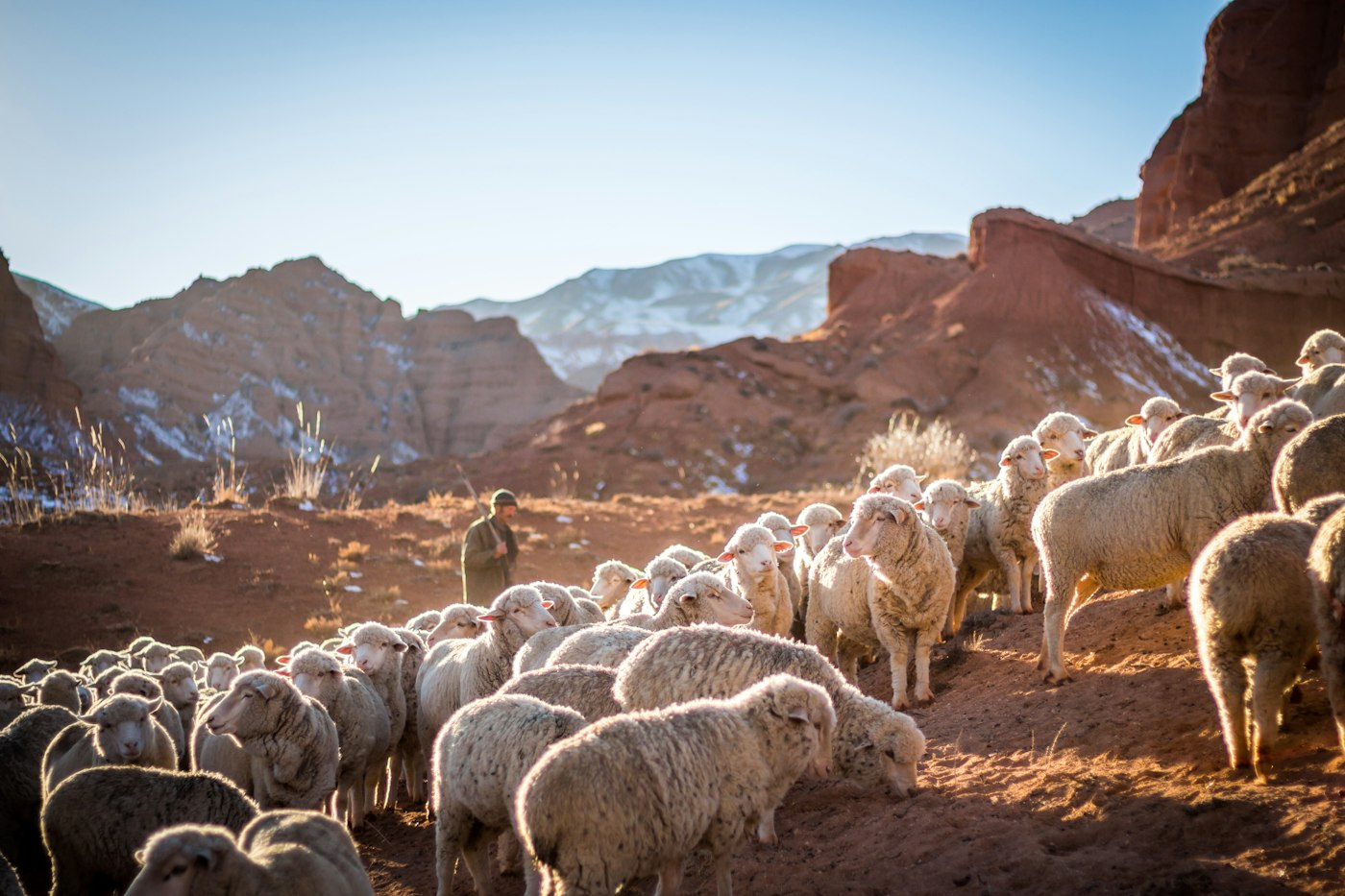
Psalm 23 is read at bedsides, funerals and moments of fear. Many people who know few other Bible passages know this one by heart. It is a psalm of David, who had been a shepherd himself before he became king, and he knew firsthand what a shepherd does for his sheep.
Let us walk through it slowly, line by line.
The Shepherd Who Provides
“The LORD is my shepherd; I shall not want” (Psalm 23:1, KJV).
Notice the word “my.” David speaks personally. The Lord is not only a shepherd in general, but his shepherd. “I shall not want” does not mean he would have everything he desired. It means he would lack nothing he truly needed.
“He maketh me to lie down in green pastures: he leadeth me beside the still waters” (Psalm 23:2). Sheep do not rest easily when they are anxious or hungry. A good shepherd provides food, safety and calm water. God gives His people rest.
The Shepherd Who Restores and Guides
“He restoreth my soul: he leadeth me in the paths of righteousness for his name’s sake” (Psalm 23:3).
Sometimes sheep wander, stumble or grow weak. The shepherd brings them back. God restores weary and wandering souls. He also leads His people in right paths, not primarily for their reputation but “for his name’s sake.” His guidance reflects His own faithful character.
The Shepherd in the Valley
“Yea, though I walk through the valley of the shadow of death, I will fear no evil: for thou art with me; thy rod and thy staff they comfort me” (Psalm 23:4).
This is the turning point of the psalm. Up to this verse, David speaks about God. Now he speaks to God: “thou art with me.” In the darkest valley, the relationship becomes most personal.
Notice that David walks through the valley. It is not his destination. The shepherd’s rod was used for protection, and the staff for guiding and rescuing. Both brought comfort to the sheep.
The Host Who Welcomes
“Thou preparest a table before me in the presence of mine enemies: thou anointest my head with oil; my cup runneth over” (Psalm 23:5).
The image shifts from shepherd to generous host. In the ancient world, a host who welcomed a guest provided food, honor and protection. Anointing with oil was a sign of welcome and blessing. God does not merely tolerate His people. He honors them, even while enemies look on.
Goodness That Follows
“Surely goodness and mercy shall follow me all the days of my life: and I will dwell in the house of the LORD for ever” (Psalm 23:6).
The word “follow” can carry the sense of pursuing. God’s goodness and mercy chase after His people every day. And the psalm ends with a home: dwelling with the Lord forever.
Jesus later said, “I am the good shepherd: the good shepherd giveth his life for the sheep” (John 10:11). Psalm 23 finds its fullest meaning in Him. Whatever valley you may be walking through, the Good Shepherd walks with you, and His goodness and mercy will follow you home.
Going Deeper: The Shepherd Thread Through Scripture
Psalm 23 does not stand alone. The image of God as Shepherd runs through the whole Bible, and seeing it helps us understand why David’s words carry so much weight.
- Jacob, near the end of his long and often troubled life, blessed his grandsons in the name of “the God which fed me all my life long unto this day” (Genesis 48:15). The word for “fed” is the shepherding word.
- Isaiah promised that the Lord “shall feed his flock like a shepherd: he shall gather the lambs with his arm, and carry them in his bosom” (Isaiah 40:11).
- Ezekiel rebuked Israel’s leaders as careless shepherds who fed themselves and not the flock. Then God promised, “I will seek that which was lost, and bring again that which was driven away, and will bind up that which was broken” (Ezekiel 34:16).
- Jesus took up that promise and applied it to Himself in John 10. He is the Good Shepherd who knows His sheep by name and lays down His life for them.
- The apostles called Him “that great shepherd of the sheep” (Hebrews 13:20) and “the chief Shepherd” who will one day appear (1 Peter 5:4).
When we pray Psalm 23, we are joining a long chorus of God’s people who discovered, in every generation, that He keeps His word to His flock.
Praying Psalm 23 Through the Week
Because the psalm is so familiar, it is easy to say it quickly without really hearing it. One simple way to slow down is to take one verse each day for a week. Read it in the morning, carry it through the day, and return to it before bed.
- Day one, verse 1: Thank God for specific needs He has met. Ask Him to quiet the wants that are not needs.
- Day two, verse 2: Take real rest, even a short walk or a quiet half hour. Ask the Shepherd to lead you to still waters.
- Day three, verse 3: Tell Him where your soul feels worn. Ask Him to restore you and lead you on right paths.
- Day four, verse 4: Name the valley you are in, or one a friend is in. Pray for them by name, remembering “thou art with me.”
- Day five, verse 5: Recall a time God provided for you in the middle of trouble. Give thanks for an overflowing cup.
- Day six, verse 6: Look back over the day and watch for goodness and mercy that followed you.
- Day seven: Read the whole psalm aloud slowly, perhaps with your family or a friend, and give thanks for the Good Shepherd.
Questions Readers Ask
Does “I shall not want” mean believers will never face hardship?
No. The same psalm that says “I shall not want” also walks through the valley of the shadow of death. David himself faced danger, betrayal and loss. The promise is not a life without trouble, but a Shepherd who never leaves and who supplies what we truly need.
Why is Psalm 23 read so often at funerals?
Because it speaks to the two things mourners most need to hear: that God is present in the darkest valley, and that His people have a home with Him forever. It comforts the grieving and honors the faith of the one who has gone ahead.
What is the “valley of the shadow of death”?
The phrase can describe a deep, dark place of danger. It certainly includes the final valley of death, but it also reaches the many dark seasons of life: illness, grief, fear and loneliness. In every one of them, the promise holds.