
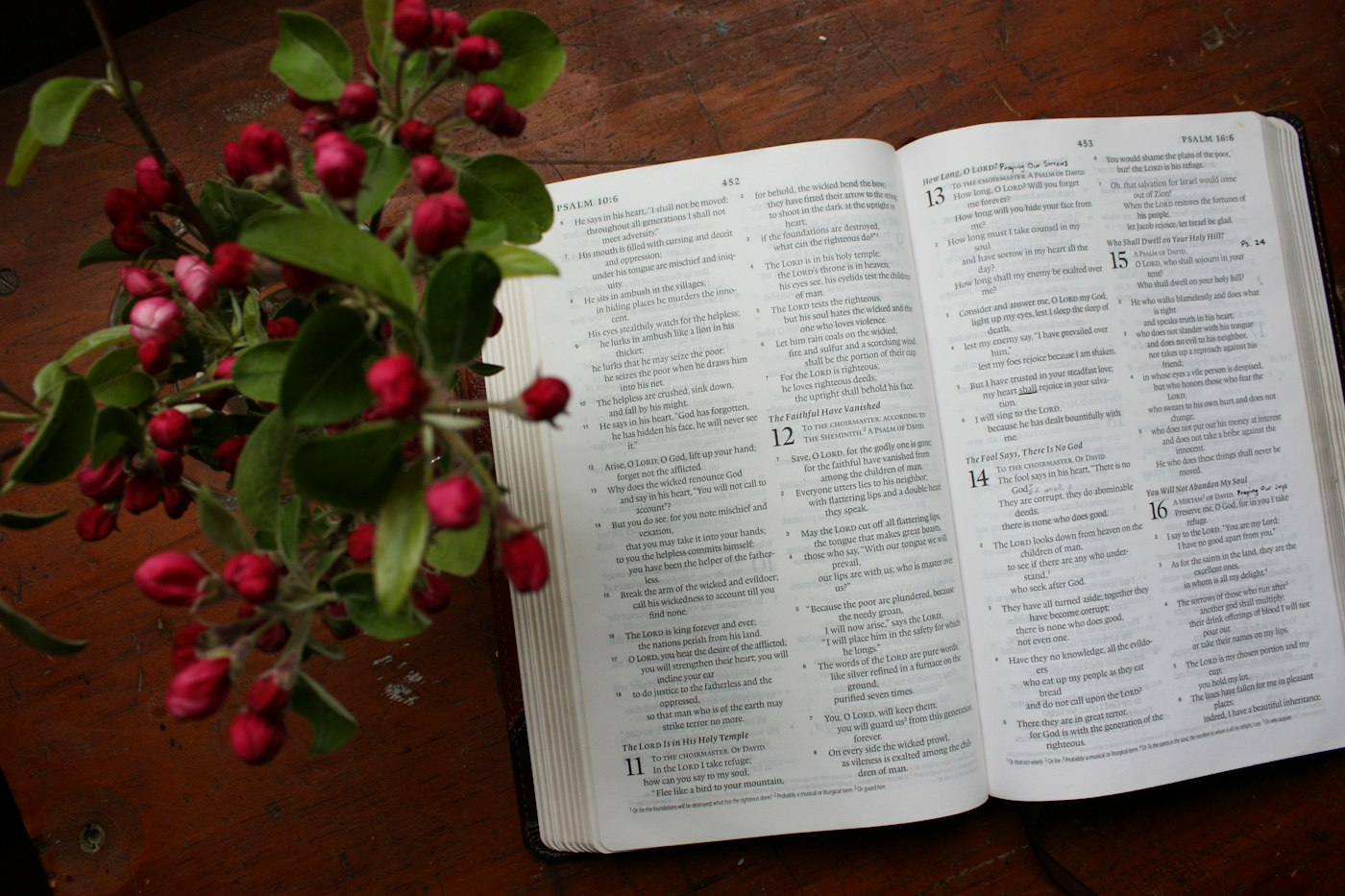
The Song of Solomon, also called the Song of Songs, is unlike any other book in the Bible. It never mentions the law, the temple or the history of Israel. It is a collection of love poetry between a bride and her beloved, full of gardens, vineyards and springtime imagery.
Many readers are not sure what to do with it. Here is a simple guide.
What Kind of Book Is It?
The book opens with the line, “The song of songs, which is Solomon’s” (Song of Solomon 1:1, KJV). The phrase “song of songs” is a Hebrew way of saying “the greatest song,” much like “King of kings.”
It is poetry, and it should be read as poetry. Its images are rich and symbolic. When the bride or groom compares the other to a lily, a dove or a garden, the point is not literal description but beauty and delight. Some of the comparisons sound unusual to modern ears, but they would have been lovely in their ancient setting.
Two Ways of Reading
Throughout history, readers have approached the Song in two main ways, and many hold both together.
- As a celebration of married love. Read plainly, the book honors the goodness of romantic love, attraction and commitment between husband and wife. It affirms that these are gifts from God.
- As a picture of God’s love for His people. Jewish tradition has often read the Song as a picture of God’s love for Israel, and it is traditionally read during Passover. Many Christians through the centuries have seen it as a picture of Christ’s love for the church.
These readings need not compete. Scripture elsewhere compares marriage to God’s covenant with His people (Ephesians 5:31-32). Human love at its best reflects divine love.
Key Themes
Several themes run through the book:
- Delight: the lovers rejoice in each other.
- Commitment: “Set me as a seal upon thine heart” (Song of Solomon 8:6).
- Patience: a repeated refrain urges, “stir not up, nor awake my love, till he please” (Song of Solomon 2:7). Love should not be rushed.
- Protection: “Take us the foxes, the little foxes, that spoil the vines” (Song of Solomon 2:15), a picture of guarding a relationship from small threats.
- Strength: “Many waters cannot quench love, neither can the floods drown it” (Song of Solomon 8:7).
Reading It Wisely
Because the Song speaks openly about romance, it is wise to read it with maturity. Parents can decide when it is appropriate to study it with older children. Married couples may find it a helpful encouragement to cherish and pursue one another.
For every reader, it is a reminder that God is not embarrassed by the love He created. He designed it, He blesses it within the covenant of marriage and He uses it to point to His own faithful, unquenchable love.
Try reading the whole book in one sitting. It takes less than half an hour, and reading it straight through helps the poetry flow as it was meant to.
Going Deeper: Following the Flow of the Song
The Song of Solomon does not tell a simple story in a straight line, and readers have outlined it in different ways. But many notice a general movement that can help a first-time reader:
- Chapters 1 and 2: Longing and courtship. The bride expresses her desire for her beloved and her sense of being unworthy: “Look not upon me, because I am black, because the sun hath looked upon me” (Song of Solomon 1:6). He answers with affirmation. The famous springtime passage appears here: “For, lo, the winter is past, the rain is over and gone; The flowers appear on the earth” (Song of Solomon 2:11-12).
- Chapter 3: Searching and the wedding procession. The bride seeks her beloved by night, and then a royal procession appears, often understood as a wedding scene.
- Chapter 4 to the start of chapter 5: The wedding and its celebration. The groom praises his bride, and she is described as a garden.
- Chapters 5 and 6: Distance and reunion. The bride hesitates, her beloved withdraws, and she searches for him again. Many married couples recognize this pattern of misunderstanding and restoration.
- Chapters 7 and 8: Mature love. The relationship deepens, ending with the powerful statement that love is “strong as death” (Song of Solomon 8:6).
Reading with this flow in mind can help the poetry make sense, even if every detail is not clear.
What the Song Teaches About Love
Beyond the themes already mentioned, the Song offers some wise lessons about love that are easy to miss:
Words of affirmation matter. The lovers constantly tell each other what they admire. They do not assume the other knows. Many relationships would be strengthened by more spoken appreciation.
Love includes belonging. “My beloved is mine, and I am his” (Song of Solomon 2:16). Later she says, “I am my beloved’s, and my beloved is mine” (Song of Solomon 6:3), and finally, “I am my beloved’s, and his desire is toward me” (Song of Solomon 7:10). Some readers see a growing security in these three statements, moving from her possession of him toward her rest in his love for her.
Love cannot be bought. “If a man would give all the substance of his house for love, it would utterly be contemned” (Song of Solomon 8:7). True love is a gift freely given, not a transaction.
Love sees beauty others may not see. The bride feels self-conscious, yet her beloved calls her “fairest among women” (Song of Solomon 1:8). Love looks with eyes of grace.
Using the Song in Married Life
For married couples, the Song can be a gentle encouragement. Some ideas:
- Read it together. Take turns reading the bride’s and groom’s parts aloud.
- Catch the little foxes. Talk about the small irritations or habits that may be spoiling the vineyard of your marriage.
- Speak appreciation. Following the example of the lovers, tell your spouse specific things you admire about them.
- Make time for each other. “Come, my beloved, let us go forth into the field” (Song of Solomon 7:11). Plan unhurried time together.
Questions Readers Ask
Why is a book like this in the Bible?
Because God created love and marriage and called them good. The Song affirms that romantic love within marriage is not something to be ashamed of but a gift to be received with gratitude.
Did Solomon write it?
The opening verse connects it with Solomon, and he is named several times in the book. Bible scholars discuss whether he wrote it, it was written for him or it was dedicated to him. Its value as Scripture does not depend on settling that question.
Is the Song quoted in the New Testament?
It is not directly quoted, but its themes of bridegroom and bride echo through the New Testament, culminating in the marriage supper of the Lamb (Revelation 19:7-9).