
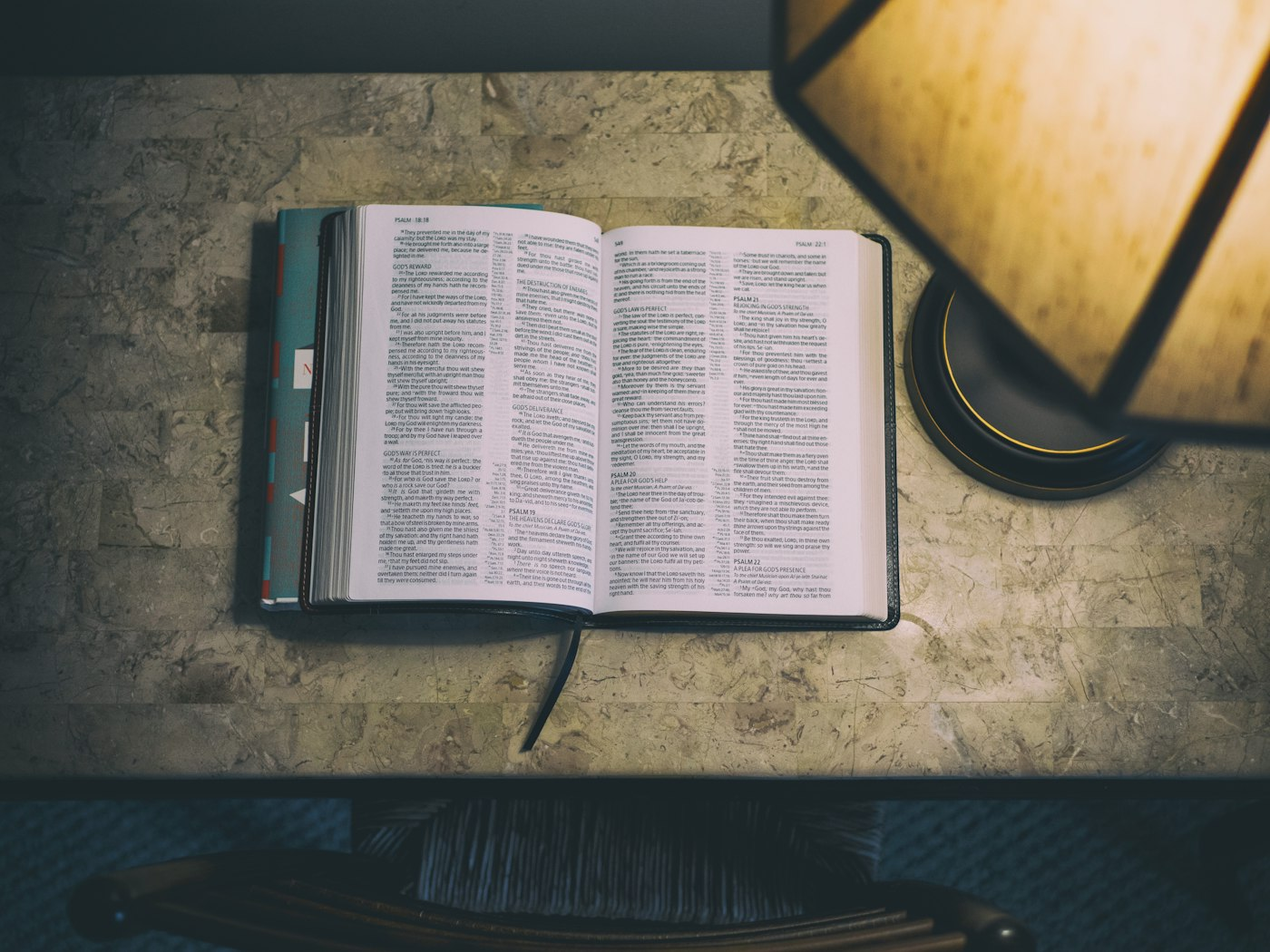
My study was my refuge and my workshop. Here on the coast it is a corner of a spare room. The books came with me. The space is smaller now, but what happens there has not changed much: I open the Word, I pray, I think, and I wait on the Lord. I want to write about that kind of place, and why every believer, not only pastors, needs one.
A Refuge
For a pastor, the study is often the one place where he can close the door. The rest of his life is public. He is at the hospital, in homes, in meetings, in the pulpit, at the church door. People need him constantly, and rightly so. But a man cannot only pour out. He must also be filled.
My study was where I went to be filled. It was where I brought my own burdens to the Lord, where I wept over hard situations, where I confessed my own sins and received grace. Many times I walked into that room weary and walked out with strength I did not have before.
Jesus taught, “But thou, when thou prayest, enter into thy closet, and when thou hast shut thy door, pray to thy Father which is in secret; and thy Father which seeth in secret shall reward thee openly” (Matthew 6:6). Every believer needs a closet of some kind, a place to shut the door and be alone with God.
A Workshop
The study was also my workshop. It was where sermons were built, one hour at a time. I read the text again and again. I studied the words, the context and the history. I consulted commentaries and the work of faithful teachers who had gone before. I prayed over each passage, asking what God was saying and what my people needed to hear.
Paul told Timothy, “Study to shew thyself approved unto God, a workman that needeth not to be ashamed, rightly dividing the word of truth” (2 Timothy 2:15). A workman needs a workshop. Preaching that feeds people does not usually come from last-minute inspiration. It comes from patient, prayerful labor over the Word.
It was work, real work, and I loved it. Some of my happiest hours were spent at that desk with an open Bible and a blank page, watching the Lord open a passage I thought I already understood.
A Corner of a Spare Room
When Jenny and I came to the coast, the study came too, though in much smaller form. It is now a corner of a spare room. A desk, a chair, a lamp and shelves of books. Nothing fancy.
But I have found that the size of the room does not matter much. What matters is what happens there. I still read the Word there. I still pray there, often with a list of names: the sick I have visited, the pastors whose churches I attended, the young pastor I meet with, my family. I still study, though now it is for my own soul rather than for a Sunday sermon. And I still meet the Lord in the quiet.
The Books Came With Me
I could not leave the books behind. Many of them have been with me for decades. Their margins hold my notes from years of study. Some were gifts. Some I saved for. Each one represents hours of learning from people who loved the Word.
Near the end of his life, Paul wrote to Timothy from prison: “The cloke that I left at Troas with Carpus, when thou comest, bring with thee, and the books, but especially the parchments” (2 Timothy 4:13). Even at the end, facing death, Paul wanted his books and especially the Scriptures. I understand that completely.
Of all the books on my shelves, of course, one matters most. The others are helps. The Bible is the Book.
Everyone Needs a Quiet Place
You do not need to be a pastor to have a study. Every believer needs a place to meet God in the quiet. It does not have to be a whole room. It might be:
- A favorite chair in the living room early in the morning.
- The kitchen table after everyone else is asleep.
- A porch with a view of the yard or the water.
- A corner of a bedroom with a lamp and a Bible.
- Your parked car on your lunch break.
What matters is that it is a place you return to regularly, where you can be undistracted and alone with the Lord.
Making the Most of Your Quiet Place
Here are some suggestions for making your quiet place a true refuge and workshop.
- Keep your Bible there. Have it open and ready, so it is easy to begin.
- Remove distractions. Put your phone in another room or turn it off.
- Keep a notebook. Write down what you learn, what you pray for and how God answers.
- Use a reading plan. A plan helps you read through Scripture steadily rather than only your favorite passages.
- Keep a prayer list. Write the names of people you are praying for, and add to it as needs arise.
- Be consistent. Go there at the same time each day if you can. Habits make faithfulness easier.
- Be still. Do not only talk. Wait. “Be still, and know that I am God” (Psalm 46:10).
What to Do This Week
- Choose a quiet place in your home and set it up with a Bible and a notebook.
- Read Matthew 6:5-13 there, and pray the Lord’s Prayer slowly.
- Write a prayer list of five people you will pray for each day.
- Spend ten minutes in silence before the Lord, simply listening.
- Pray for your pastor’s study time this week, that he would be filled before he pours out.
Prayer: Lord, meet us in the quiet. Amen.