
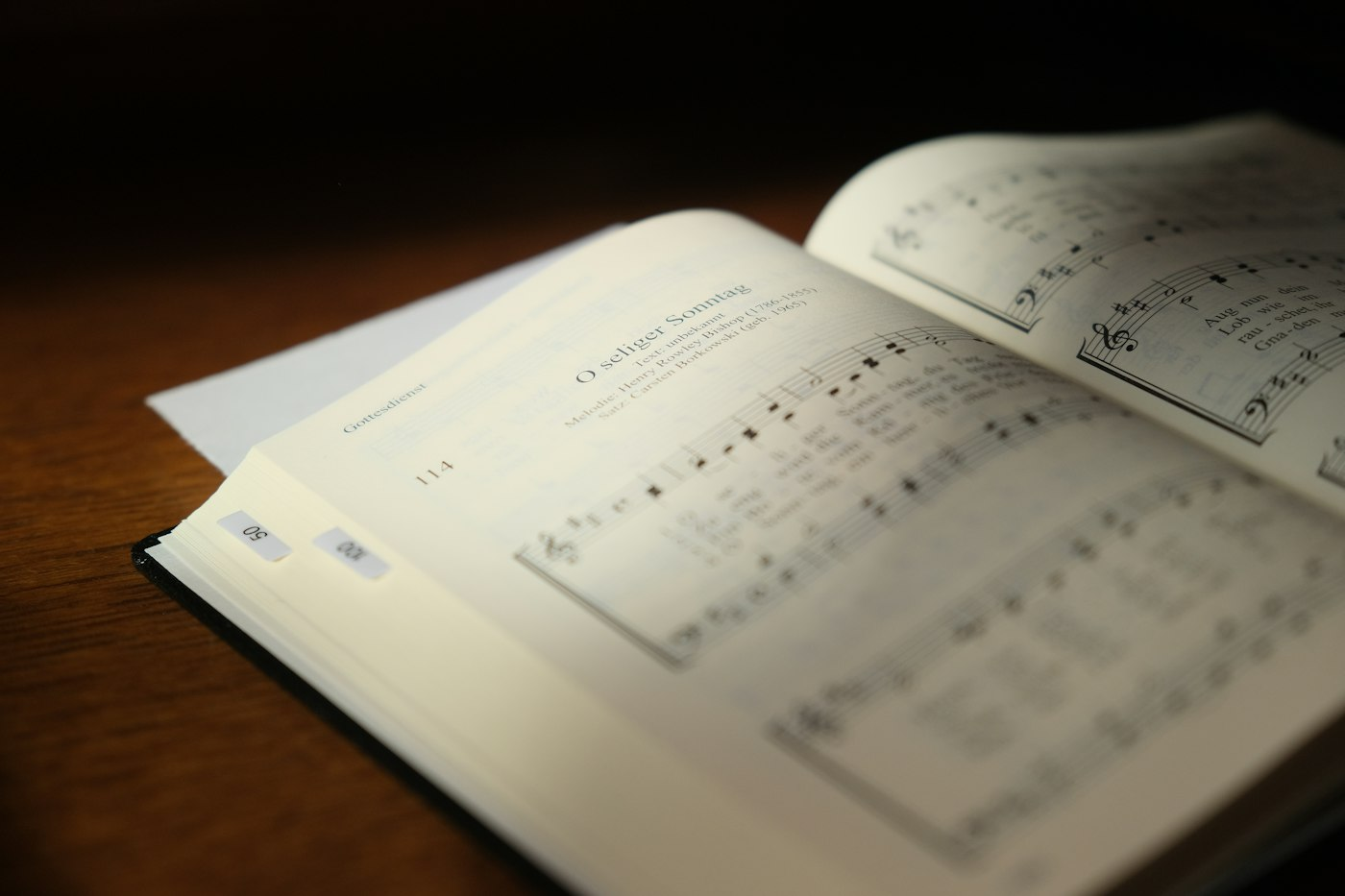
“Great Is Thy Faithfulness.” “It Is Well.” “Amazing Grace.” I have sung them at bedsides and gravesides and in full sanctuaries. They are theology set to melody, and they outlast every trend. When words of my own have failed me, and they have failed me more times than I can count, these songs have said what needed saying.
I want to spend a little time with these three hymns, because I think they have something to teach a church in any generation about what we sing and why.
Songs for Every Room
A pastor’s week can take him from a hospital room on Monday to a wedding on Saturday to a graveside on Tuesday. Over the years I noticed that the same handful of hymns kept going with me into all of those rooms. I would hum “It Is Well” in the car on the way to hear hard news. I would hear a whole congregation lift “Amazing Grace” on a bright Sunday morning. I would stand at an open grave with a grieving family and we would sing “Great Is Thy Faithfulness” with tears running down our faces, and somehow mean every word.
That is the mark of a song that carries people. It fits the sanctuary and the sickroom. It is true when life is good and true when life falls apart. A song like that is not a performance. It is a companion.
“Great Is Thy Faithfulness”
This hymn grows straight out of one of the darkest books in the Bible. Lamentations is a funeral song for a ruined city, and yet in the middle of it Jeremiah writes, “It is of the Lord’s mercies that we are not consumed, because his compassions fail not. They are new every morning: great is thy faithfulness” (Lamentations 3:22-23).
That is why the hymn works at a graveside. It does not pretend that grief is not real. It simply says that God’s faithfulness is more real. “Morning by morning new mercies I see.” A widow can sing that the day after the funeral and the next morning wake up and find that it is true: the mercy came again.
“It Is Well With My Soul”
Horatio Spafford wrote the words after his four daughters were lost at sea in a shipwreck. That history is well known, and it is why the hymn carries such weight. It was not written by someone who had never suffered. It was written by a man who had lost nearly everything and still found that God was enough.
“When sorrows like sea billows roll; whatever my lot, Thou hast taught me to say, It is well, it is well with my soul.” Notice the words “Thou hast taught me.” Peace like that is not something we produce. It is something God teaches us, often slowly, often in the dark. I have watched people learn it in hospital rooms. I am still learning it myself.
“Amazing Grace”
John Newton had been a slave trader before his conversion, and he spent the rest of his life amazed that God would save a man like him. “Amazing grace! how sweet the sound, that saved a wretch like me!” Some people today are uncomfortable with that word, wretch. I understand why. But I have found that the people who sing it most sincerely are the ones who know exactly what they have been forgiven of.
This hymn tells the whole story of salvation in a few verses: lost and found, blind and seeing, dangers and toils and snares, and grace that “will lead me home.” It is the gospel in a form that a child can learn and an old man can still remember on his last day.
Why the Old Hymns Outlast the Trends
I am not against new songs. The psalmist said, “O sing unto the Lord a new song” (Psalm 96:1), and every hymn I love was once new. Some of the songs written in recent years are rich and true, and I am glad to sing them. My concern is not old versus new. It is shallow versus deep.
Here is what the hymns that last tend to have in common:
- They teach. Paul told the Colossians to let the word of Christ dwell in them richly, “teaching and admonishing one another in psalms and hymns and spiritual songs” (Colossians 3:16). A good hymn is a sermon you can remember.
- They are honest about suffering. They do not skip from Good Friday to Easter without stopping at the cross.
- They point to God more than to our feelings. Feelings change. God’s faithfulness does not.
- They can be sung together. A melody a whole room can carry, old and young, trained and untrained, is a gift to a congregation.
- They are tied to Scripture. Each of these three draws its language from the Bible, which is why they ring true.
Theology set to melody gets into us in a way a lecture never does. People who cannot remember a single sermon I preached can still sing every verse of these songs. That tells me something about where the church should put its effort.
Passing the Songs On
The danger is not that these hymns will be proven wrong. The danger is that a generation will simply never learn them. That is a loss we can prevent, and it does not take a committee. It takes grandparents singing to grandchildren, parents playing hymns in the car, choirs and worship leaders choosing to include them, and congregations that sing them with joy rather than duty.
I have seen young people come to love these songs once someone took the time to tell them where they came from and what they mean. A story like Spafford’s or Newton’s opens the door. After that, the truth in the words does the rest.
What to Do This Week
- Read Lamentations 3:19-26 and then sing or read the words of “Great Is Thy Faithfulness.”
- Learn the story behind one hymn you love and tell it to someone younger than you.
- Memorize one full verse of a hymn so you can sing it at a bedside without a book.
- Thank your church’s musicians for the songs they help you sing.
- When trouble comes this week, try praying the words “It is well with my soul” and asking God to make them true in you.
Prayer: Lord, keep the old songs alive in new hearts. Amen.