
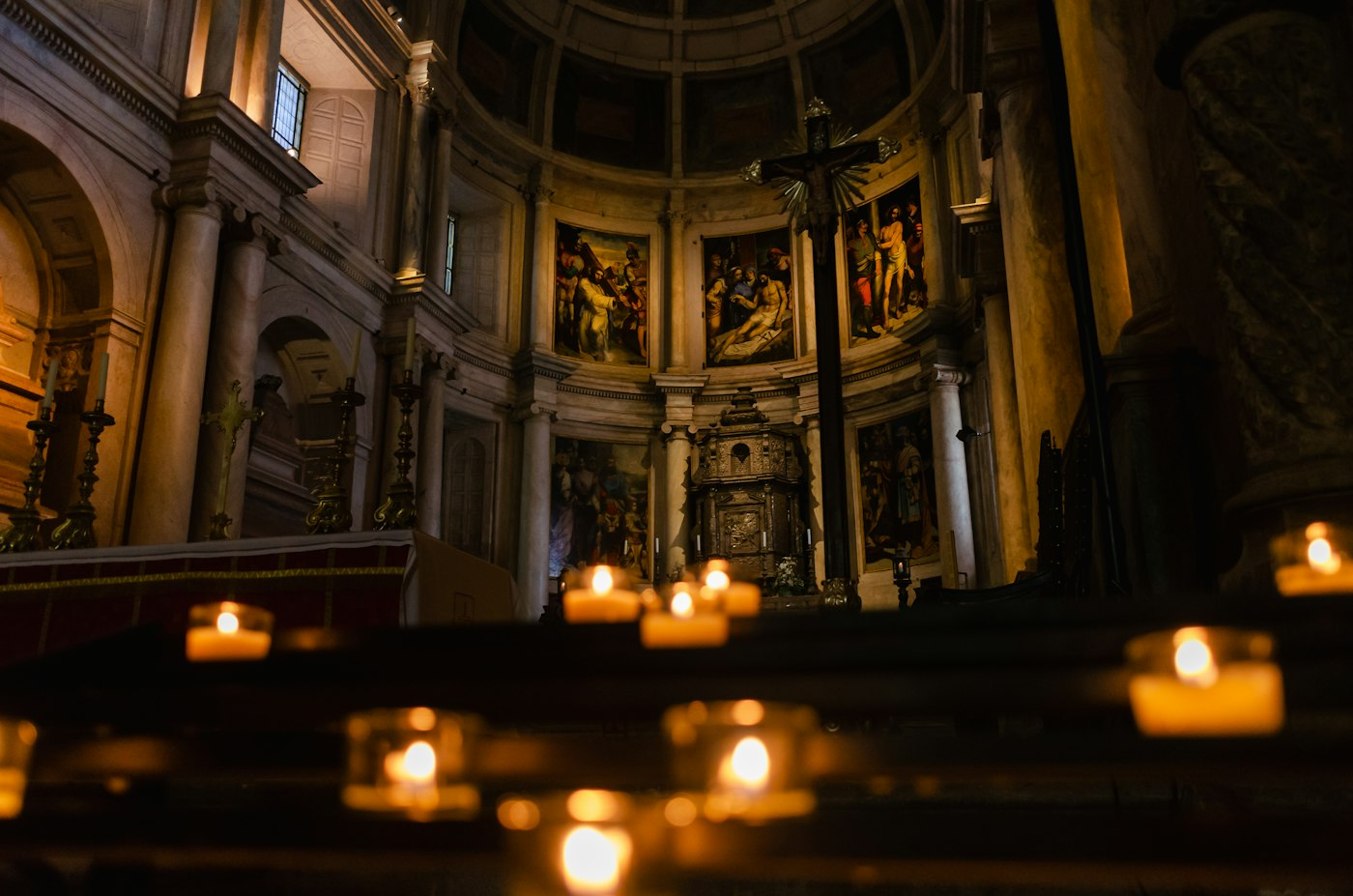
I gave thousands of invitations and never knew who would come. Sometimes no one. Sometimes the person I least expected. The Spirit moves where He will; my job was to invite. In many of the churches I grew up in and served, the altar call was a regular part of every service: the closing hymn, the pastor standing at the front, an open invitation to anyone who wanted to come forward to pray, to trust Christ, to rededicate their lives or simply to ask for help. I want to reflect on what those moments taught me.
What an Altar Call Is
For those unfamiliar with the tradition, an altar call, sometimes called an invitation, comes at the end of a sermon. The pastor invites people to respond to the message. Often the congregation sings a hymn while people are given the opportunity to come forward. Some come to make a profession of faith in Christ. Some come to confess sin and recommit their lives to Him. Some come to ask for prayer, to request baptism or to join the church. Some simply kneel at the front and pray.
Different churches practice this in different ways, and some do not practice it at all. But the heart of it is something every church should share: an open invitation to come to Jesus.
Never Knowing Who Would Come
I gave thousands of invitations over my years of ministry. And I never knew who would come.
Some Sundays, I would preach a sermon I felt sure would move people, and nobody came. I would stand at the front through the whole hymn, then another verse, and the aisles stayed empty. Those Sundays were humbling. I had to remind myself that faithfulness, not results, was my responsibility.
Other Sundays, I would preach a sermon I thought was weak, and someone would come forward weeping. Often it was the person I least expected. Someone I had assumed was settled in their faith. Someone who had seemed hardened for years. Someone visiting for the first time. I learned not to predict.
Jesus told a parable about a sower whose seed fell on four kinds of ground: the path, the rocky places, the thorns and the good soil (Matthew 13:3–8). The sower did not choose where the seed would land. He scattered it everywhere. Only later did it become clear which ground was good. That is what giving an invitation felt like.
The Spirit Moves Where He Will
Jesus told Nicodemus, “The wind bloweth where it listeth, and thou hearest the sound thereof, but canst not tell whence it cometh, and whither it goeth: so is every one that is born of the Spirit” (John 3:8). The work of the Spirit is mysterious. We cannot control it, predict it or manufacture it.
That truth both humbled and freed me. It humbled me because I realized I could not make anyone respond. No technique, no amount of pleading, no extra verse of the hymn could change a heart. Only God could do that. “No man can come to me, except the Father which hath sent me draw him” (John 6:44).
But it also freed me. If the results were in God’s hands, then I did not need to carry the weight of them. I could preach faithfully, invite sincerely and leave the outcome to Him.
My Job Was to Invite
My job was to invite. That was it. Not to pressure, not to manipulate, not to count. Just to invite.
The Bible is full of invitations. Isaiah wrote, “Ho, every one that thirsteth, come ye to the waters” (Isaiah 55:1). Jesus said, “Come unto me, all ye that labour and are heavy laden, and I will give you rest” (Matthew 11:28). And the very last chapter of the Bible ends with an invitation: “And the Spirit and the bride say, Come. And let him that heareth say, Come. And let him that is athirst come. And whosoever will, let him take the water of life freely” (Revelation 22:17).
God is an inviting God. And He calls His people to extend His invitation to others. Paul wrote, “Now then we are ambassadors for Christ, as though God did beseech you by us: we pray you in Christ’s stead, be ye reconciled to God” (2 Corinthians 5:20). An ambassador does not create the message. He delivers it faithfully.
Inviting well
Over the years I learned some things about giving an invitation well:
- Be clear. Explain plainly what you are inviting people to do and why.
- Be sincere. Invite because you genuinely want people to come to Christ, not to meet a quota.
- Do not manipulate. Emotional pressure may produce a response, but it does not produce faith.
- Be patient. Give people time. Some need to sit with the decision.
- Follow up. A decision at the altar is the beginning of a journey, not the end. Meet with those who respond, and help them take next steps.
- Trust God. Whether many come or none, leave the results to Him.
An Invitation Is Not Just for Pastors
You may never stand at the front of a church and give an altar call. But every believer is called to invite others to Christ. It may be as simple as inviting a neighbor to church, sharing your faith with a coworker, or asking a friend if you can pray with them.
And just like with an altar call, you will never know who will respond. Sometimes no one. Sometimes the person you least expected. Your job is not to change hearts. Your job is to invite.
Andrew, after meeting Jesus, “first findeth his own brother Simon, and saith unto him, We have found the Messias… And he brought him to Jesus” (John 1:41–42). Andrew did not preach a sermon. He simply invited his brother. And Simon became the apostle Peter.
What to Do This Week
- If God has been stirring your heart, respond. Talk to a pastor or a trusted believer, or simply pray right where you are.
- Think of one person you could invite to church or to a conversation about faith.
- Pray for the people who will hear an invitation this Sunday in churches across the coast and beyond.
- Read John 3:1–21 and Revelation 22:17.
- Thank God for the person who first invited you to Christ.
Prayer: Lord, keep drawing hearts to Yourself. Amen.