
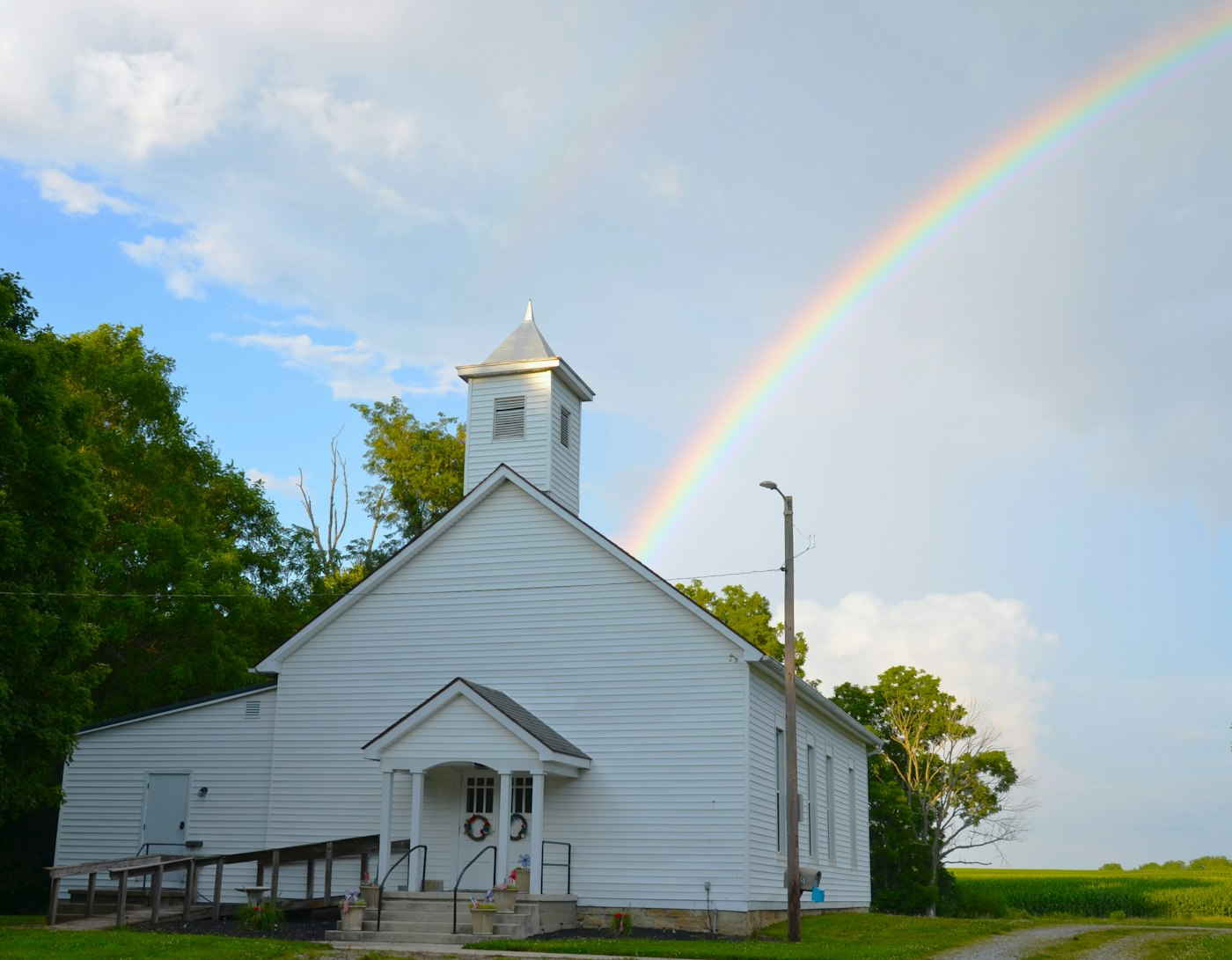
When I was a young pastor, summer meant revival meetings. A week of services, a visiting evangelist, dinner on the grounds, and children running between the pews. People make fun of those days now. I was there, and I know what was real. Some of it was imperfect, and I will say so. But I would not want anyone to think that because those meetings are out of fashion, God was not in them. He was, and I believe He can be again.
What a Revival Week Was Like
For those who did not grow up with them, a revival meeting was a series of services held every night for a week or more, usually in the summer. Churches would invite a visiting evangelist, or sometimes a neighboring pastor, to preach. Some met in the church building, and some in a tent set up in a field or a vacant lot. The heat was part of the experience. Funeral-home fans waved back and forth all evening.
The services were simple. Congregational singing, often loud and long. Special music from a local quartet or a soloist. A sermon. And an invitation at the end. On Sunday afternoon or at the close of the week, there might be dinner on the grounds, with tables set up under the trees and every family bringing their best dish.
Children ran between the pews and played outside after dark while the grown-ups talked. Whole families came night after night. For a week, the church became the center of community life.
What Was Real
People got saved. Marriages were mended. Men who had not darkened a church door in years came forward. The preaching was plain and the singing was loud, and God was in it.
I want to be clear about this, because it is easy to dismiss what we did not experience. I saw people come to faith in Christ during those weeks who went on to walk with Him for the rest of their lives. I saw husbands and wives who had been barely speaking kneel together at the altar. I saw men whose families had prayed for them for years finally walk down the aisle.
Revival, in the biblical sense, is not an event we schedule. It is God reviving His people, restoring their love for Him and stirring them to repentance and obedience. The meetings were simply a time set apart to seek that. And often He answered.
Scripture is full of seasons like this. Under King Josiah, the book of the law was found and read, and the nation turned back to God (2 Kings 22–23). Under Nehemiah, Ezra read the law to the people, and they wept and then rejoiced (Nehemiah 8). On the day of Pentecost, Peter preached plainly and about three thousand were added to the church (Acts 2:41). God has always moved in seasons of focused seeking.
What Was Not
Some of it was emotion that did not last. Some evangelists were more showman than shepherd. I learned to tell the difference, and to follow up the week after, when the tent came down and the real work began.
Emotion that faded
Jesus told a parable about seed that fell on stony ground. It sprang up quickly, “but when the sun was up, it was scorched; and because it had no root, it withered away” (Mark 4:6). I saw that happen. Some people responded in a moment of feeling and were gone by August. That is not a reason to stop sowing. It is a reason to pay attention to roots.
Showmen
Most of the evangelists I knew were sincere men who loved the Lord. A few were more interested in the offering, the attention or the number of people who came forward. You could usually tell. They pushed too hard. They told stories that grew with each telling. They left town and never asked about the people they had preached to. A shepherd cares about the sheep after the meeting is over. A showman does not.
The week after
I learned that the most important week of revival was the one after it ended. That was when I visited the people who had come forward, sat down with them, and helped them take the next steps. Baptism. Joining a Sunday school class. Reading the Bible. Getting to know other believers. The decision at the altar was a beginning, not an ending. Jesus commanded us to make disciples, not just converts (Matthew 28:19–20).
What I Miss
The expectancy. Whole congregations praying for a week that God would move. “Wilt thou not revive us again: that thy people may rejoice in thee?” (Psalm 85:6). We believed He would. He often did.
That is what I miss most. Not the tents or the fans or even the dinners, though I loved those. I miss the sense that a whole church was leaning forward together, asking God for something they could not produce on their own. Weeks before the meetings, people were praying. They made lists of friends and family who needed the Lord. They invited neighbors. They came every night expecting something to happen.
Psalm 85 is a prayer of people who remember what God has done before and ask Him to do it again. “Shew us thy mercy, O Lord, and grant us thy salvation” (Psalm 85:7). That prayer is as fitting now as it was then.
Still Praying the Same Prayer
I visit churches now that still hold revivals. I go. I sit near the back. And I pray the same prayer.
The format may look different now. Some churches hold a few nights of meetings instead of two weeks. Some call them renewal services or a week of prayer. The name does not matter much. What matters is whether God’s people are genuinely seeking Him with expectancy.
How to Seek Revival Today
- Start with yourself. Revival begins with God’s people. Ask Him to search your own heart (Psalm 139:23–24).
- Pray with others. Find even one or two people who will pray regularly for your church and community.
- Make a list. Write down the names of people you long to see come to Christ, and pray for them by name.
- Support your church’s special services. If your church holds a revival or prayer meeting, go every night you can, and bring someone.
- Follow up. If someone you know makes a decision for Christ, walk with them in the weeks afterward.
- Pray Psalm 85:6 this week, slowly, as your own prayer.