
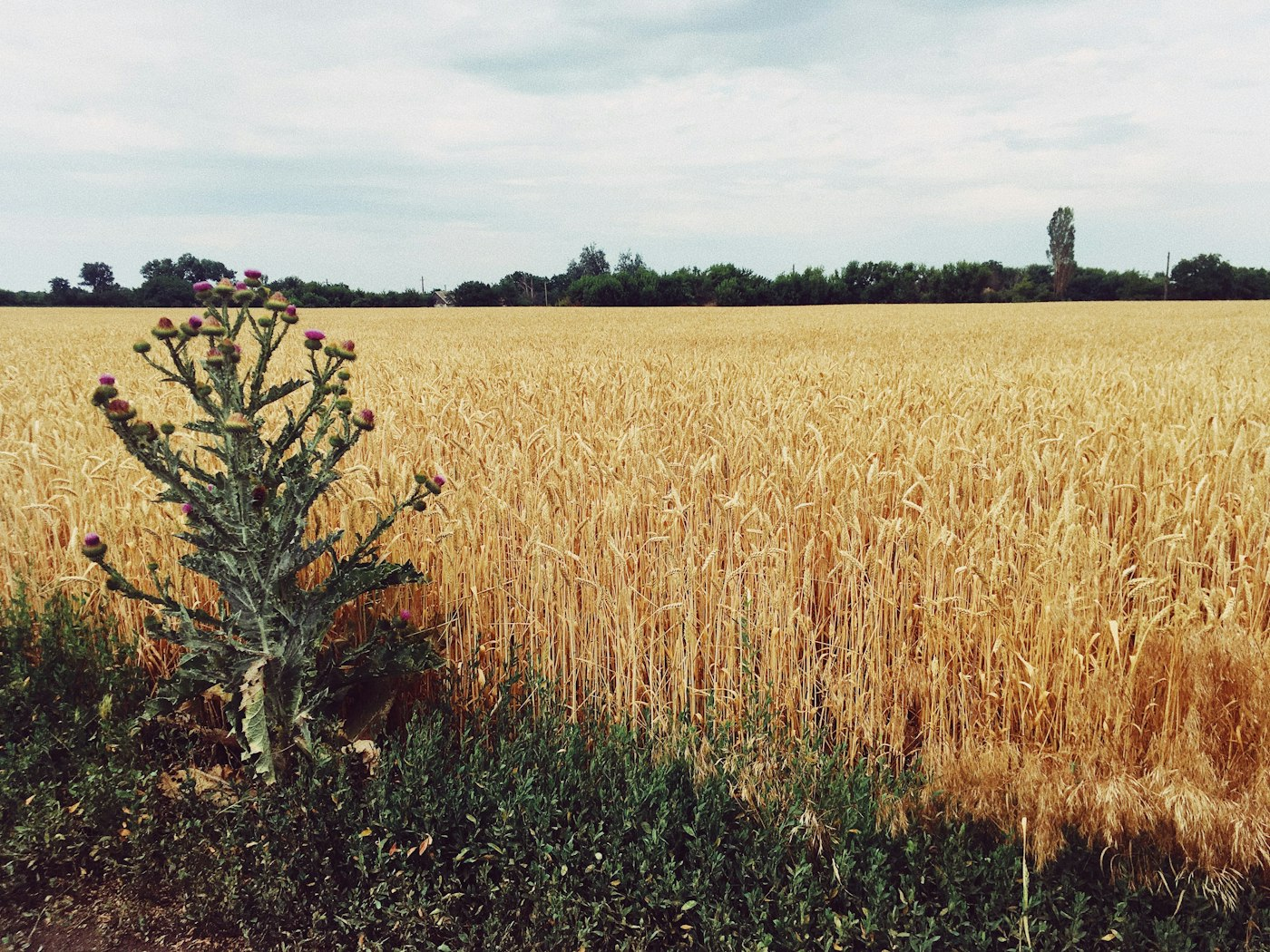
By midsummer, every gardener knows the frustration of weeds. They show up uninvited, grow faster than anything planted on purpose and sometimes look so much like the real crop that it is hard to tell them apart. Jesus used that familiar experience to answer one of life’s hardest questions: why does God allow evil to grow alongside good?
The Story
“The kingdom of heaven is likened unto a man which sowed good seed in his field: But while men slept, his enemy came and sowed tares among the wheat, and went his way” (Matthew 13:24-25, KJV).
Nothing seemed wrong at first. But “when the blade was sprung up, and brought forth fruit, then appeared the tares also” (Matthew 13:26). The servants were confused. Had their master not sown good seed? He answered plainly: “An enemy hath done this” (Matthew 13:28).
Many scholars identify these tares with darnel, a weed that looks very much like wheat in its early growth. Only as the plants mature does the difference become obvious.
Why Not Pull Them Up?
The servants wanted to rip out the weeds at once. The master refused: “Nay; lest while ye gather up the tares, ye root up also the wheat with them. Let both grow together until the harvest” (Matthew 13:29-30).
The roots were tangled together, and pulling one would damage the other. So the master chose patience, and promised that at harvest the reapers would gather the tares to be burned and the wheat into his barn.
Jesus Explains
Later, in private, the disciples asked what the parable meant. Jesus answered: “He that soweth the good seed is the Son of man; The field is the world; the good seed are the children of the kingdom; but the tares are the children of the wicked one; The enemy that sowed them is the devil; the harvest is the end of the world; and the reapers are the angels” (Matthew 13:37-39).
Notice that “the field is the world.” Jesus is describing human history as a whole, where God’s people live alongside those who oppose Him. The parable explains why final judgment has not yet fallen: God is patient, and He will sort things out with perfect justice at the right time.
Lessons From the Field
- Evil is real, and it has a source. When wrong shows up where good was planted, “an enemy hath done this.” Not every problem is our fault.
- We are not the final judges. Our eyes cannot read every heart. Discernment is wise, but final judgment belongs to the Lord of the harvest.
- Patience is not approval. God’s delay is mercy that gives time for repentance (2 Peter 3:9), not indifference to evil.
- The harvest is coming. “Then shall the righteous shine forth as the sun in the kingdom of their Father” (Matthew 13:43).
The next time you kneel in a weedy garden, let it remind you of this parable. Tend your own row faithfully. Trust the Lord with the field. Harvest day will set everything right.
Going Deeper: Three Parables That Belong Together
Matthew 13 is a chapter of parables, and the wheat and the tares stands alongside several others that help us understand it. Just before it is the parable of the sower, where the seed falls on different kinds of soil (Matthew 13:3-9). Just after it come the mustard seed and the leaven (Matthew 13:31-33), and later in the chapter the parable of the net cast into the sea that gathers “of every kind” (Matthew 13:47-50).
Read together, these parables give a balanced picture of God’s kingdom in the present age. It starts small, like a mustard seed, but it grows. It works quietly, like leaven in dough, but it spreads through the whole. It meets resistance, both from poor soil and from an enemy who sows weeds. And it will end with a final sorting, when the good and the bad are separated by the Lord’s own hand. The parable of the net ends with the same words as the explanation of the tares: “So shall it be at the end of the world” (Matthew 13:49).
That balance is important. Without the wheat and the tares, we might expect the kingdom to grow without opposition. Without the mustard seed, we might think evil will always have the upper hand. Jesus gives us both truths at once: the kingdom is surely growing, and the enemy is surely active, until the harvest.
Common Mistakes in Applying This Parable
- Using it to avoid church discipline. Jesus said “the field is the world,” not the church. Elsewhere Scripture gives the church responsibility for caring correction of its members (Matthew 18:15-17). This parable is about God’s patience with the world, not about ignoring sin within the fellowship.
- Trying to sort the field ourselves. The servants’ zeal was understandable, but it would have destroyed good wheat. Harsh judgment of others can wound people who are genuinely growing.
- Assuming we are always the wheat. The parable should make us examine our own hearts, not only point fingers at others. Paul wrote, “Examine yourselves, whether ye be in the faith” (2 Corinthians 13:5).
- Losing hope because of the weeds. Evil in the world is not proof that God’s planting has failed. The wheat is still growing.
What This Means for You
When You Are Discouraged by Evil
Many believers grow weary reading the news or watching wrong go unpunished. The psalmist felt this too: “For I was envious at the foolish, when I saw the prosperity of the wicked… Until I went into the sanctuary of God; then understood I their end” (Psalm 73:3, 17). This parable invites us into that sanctuary perspective. God sees, and He will act.
When You Want Justice Now
It is right to long for justice, and Christians should work for what is right in their communities. But the final reckoning belongs to God. “Vengeance is mine; I will repay, saith the Lord” (Romans 12:19). That frees us from bitterness.
When You Wonder About Your Own Heart
If you are worried whether you are wheat or tare, that concern is itself a good sign. Tares do not worry about being tares. Bring your heart to Christ, trust Him and keep growing toward the harvest.
Questions for Reflection
- Where have I seen “an enemy hath done this” in my own life or community?
- Am I more likely to be too harsh with others or too careless with my own sin?
- How does God’s patience with the world give me hope for people I love who are far from Him?